On the eve of the 150th anniversary of the outbreak of the April Uprising, the Battle of the Dryanovo Monastery is being remembered.
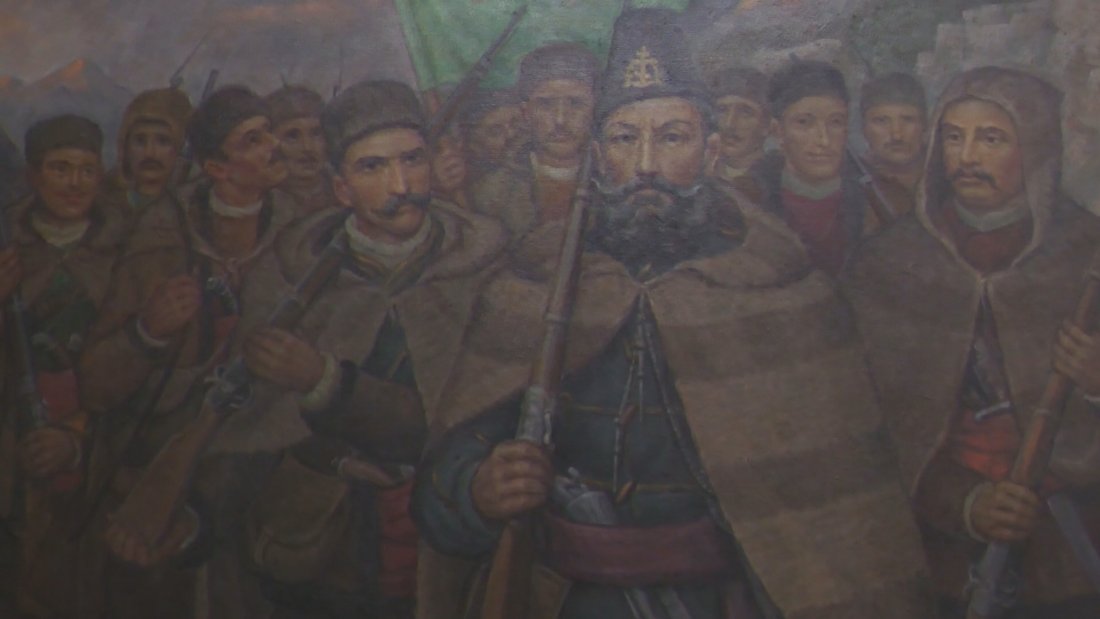
Around 200 Bulgarian insurgents fought against a vastly larger Ottoman force and managed to hold the monastery, which became a natural fortress for nine days. It remains the longest battle of the uprising, and its impact resonated internationally, marking an important step towards Bulgaria’s liberation.
The end of April 1876: Bacho Kiro and Pop Hariton went from house to house in villages around the town of Pavlikeni (Northern Bulgaria), gathering a detachment (cheta) to join the April Uprising.
According to accounts, no one refused to join. The rebels set out from the village of Musina, with the intention of reaching the Balkan Mountains, where they were to unite with other detachments from Gabrovo and Tryavna.
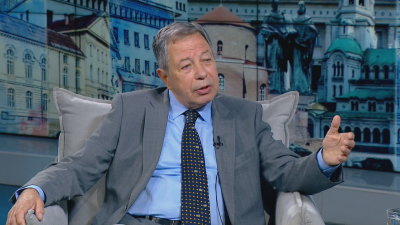
Historian Dyanko Kolev, curator at the History Museum in Dryanovo, said that the united insurgent detachment arrived near the Dryanovo Monastery on 29 April at around 2 pm.
The original plan was to collect ammunition, supplies and provisions from the monastery and then continue towards the Balkan Mountains.
However, he explained that Ottoman forces reacted quickly after tracking the unit’s movements, and were able to encircle the detachment, effectively forming a “pocket” in which the insurgents became trapped.
The monastery became a natural fortress. Under the leadership of Pop Hariton, Bacho Kiro and military commander Petar Parmakov, the insurgents decided to remain and defend their position.
Despite the uneven nature of the fighting, the rebels managed to hold out, relying on defensive tactics and the strong natural position of the monastery.
Dyanko Kolev, curator at the History Museum in Dryanovo, said the main credit likely goes to military commander Petar Parmakov, who had formal military training and positioned the insurgents effectively across key defensive points, from which they were under constant attack for eight to nine days.
By the end of the nine-day battle, the rebels were effectively surrounded by close to 10,000 enemy troops — a ratio of roughly 1 to 50 in favour of the encircling forces, not to mention the significant advantage in weaponry held by the Ottoman side.
The cost was severe. Around 150 insurgents were killed, with only 47 surviving. The monastery was also almost completely destroyed. Fire and artillery obliterated buildings, churches and property, yet the echo of the battle remained powerful.
Dyanko Kolev, curator at the History Museum in Dryanovo, said that although the uprising suffered a military defeat, it can be argued that it achieved its broader objective — securing a political outcome through the intervention of the Great Powers, which followed only a few months later.
The monastery was later restored. An ossuary was built in its courtyard, and a museum exhibition now preserves the memory of the sacrifice and heroism of the insurgents from the detachment led by Pop Hariton and Bacho Kiro.
***
The Dryanovo Epopee (Dryanovo Epic) refers to the heroic and desperate nine-day defense of the Dryanovo Monastery by Bulgarian rebels against Ottoman forces during the April Uprising of 1876. It is regarded as one of the most significant and defining battles of the insurrection.
The April Uprising broke out on April 20, 1876, in the town of Koprivshtitsa. It was suppressed by the Ottoman authorities, but produced a wide international response and indirectly resulted in the establishment of Bulgaria as an independent nation in 1878.
The decision to start the uprising was taken by the Giurgiu Revolutionary Committee, the Bulgarian lands were divided into 5 revolutionary districts - the first Tarnovo, the second Sliven, the third Vratsa, the fourth Plovdiv and the fifth Sofia.
The preparation took only a few months, which explains its failure on the battlefield. In fact, the uprising broke out en masse mostly in the first Tarnovo district, where one of its apostles was the then future Prime Minister of Bulgaria, Stefan Stambolov, and in the fourth Plovdiv district with the apostle Panayot Volov and assistant Georgi Benkovski.
The uprising broke out prematurely on April 20. In an attempt to capture Todor Kableshkov by the Ottomans, the residents of Koprivshtitsa took up arms and killed the local "mudurin" (Turkish Deputy Governor). Kableshkov wrote his famous “Blood Letter”, which was sent to Benkovski in Panagyurishte. He then announced the beginning of the uprising and the rest is history ...
Despite the defeat and atrocities committed by the Ottoman Empire in Batak, Perushtitsa, Klisura, Panagyurishte, the action was a political success, making the Bulgarian question part of the agenda of European diplomacy at the time.
The public in the two most powerful empires at the time and considered irreconcilable opponents - Russia and Britain - stood on the side of the Bulgarian cause. Rallies and meetings in support of the Bulgarians took place in numerous big English cities The situation was similar in Russia, where both conservatives and liberals were united in defending the enslaved Bulgarians.
Thus, the April Uprising, from a military failure became a triumph and a reason for the Liberation of Bulgaria. This happened two years later after Russia carried out the will of the European concert - Britain, Germany, Austria-Hungary, France and Italy - declared war on the Ottoman Empire.
Thanks to the self-sacrifice of the heroes of the April Epic, today there is a Bulgarian state, we now know the pleasure of the feeling of speaking our native language. However, the main goal of this uprising was the emergence of Bulgaria on the European political map. This would not have been possible if not for the April Uprising as the highest peak of the Bulgarian national liberation movement.






 Чуй новините
 Подкаст