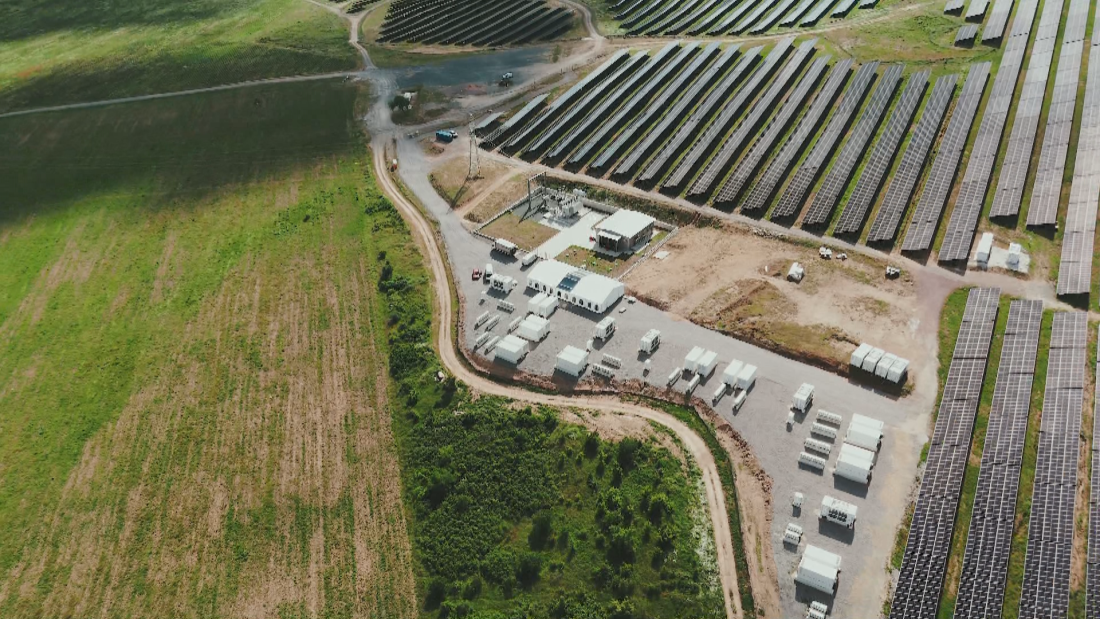
Bulgaria is a global leader in terms of the share of electricity storage batteries within its energy system. In just two years, storage capacity worth nearly €2 billion has been installed across the country.
According to experts, this is transforming not only Bulgaria’s energy market but also the country's role across the wider region.
The rapid expansion of renewable energy sources is going hand in hand with the development of electricity storage systems, enabling energy to be stored and used when it is needed most.
Eng. Martin Georgiev, Chief Executive Officer of a leading electricity trading company:
“This is a source of pride, as Bulgaria is a leader in Europe. In terms of total capacity and installed storage facilities, we rank third, behind only Germany and Italy.
“At present, Bulgaria is successfully establishing itself as a regional hub for energy storage in our region”
Yuri Katanov, Chief Executive Officer of an electricity trading, supply and energy management company:
“There was funding available, including subsidies for some market participants. However, even without those subsidies, there was a very strong market incentive.
“That incentive came from the difference in electricity prices between the middle of the day and the early morning hours, when there is no morning generation.”
According to industry data, Bulgaria now has more than 3 gigawatts of battery storage capacity. As a result, the country is steadily establishing itself as an important balancing force in the regional energy market.
Electricity storage batteries account for more than 16 per cent of Bulgaria’s installed power generation capacity, with the majority of this capacity concentrated in large-scale grid-connected systems.
Experts say the real challenge still lies ahead. The newly installed capacity must be utilised as efficiently as possible in order to deliver maximum benefits for both the energy system and consumers.
Yuri Katanov, Chief Executive Officer of an electricity trading, supply and energy management company:
“Consumers are unlikely to see an immediate change or adjustment in their electricity bills. However, in the long term, the presence of battery storage and other flexible assets within the system is beneficial.
“This means that, over time, various costs across the energy system are likely to decline.”
Eng. Martin Georgiev, Chief Executive Officer of a leading electricity trading company:
“These facilities provide greater independence and price stability. Despite the significant increases in oil, gas and other commodity prices resulting from the conflict in the Middle East, Bulgaria’s domestic energy production has, to a large extent, helped to cushion the impact and support the country’s competitiveness.”
Following the record growth in investment, the focus should now shift from the number of new batteries being installed to how effectively they are managed. It is this that will determine whether Bulgaria can turn its technological advantage into a more secure and competitive energy system.








 Чуй новините
 Подкаст