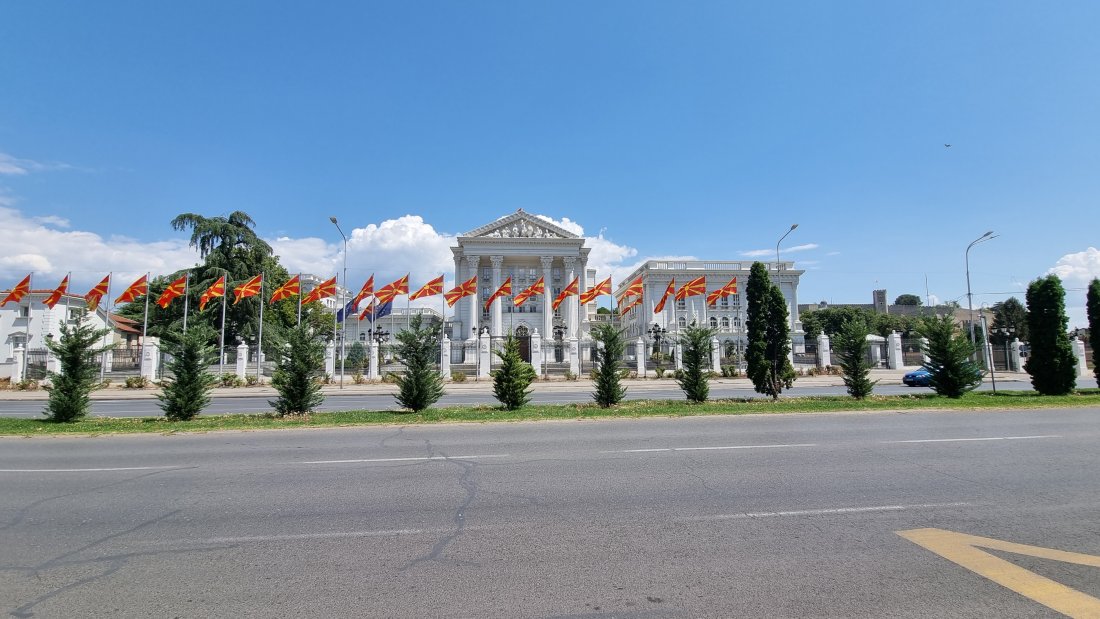
Bulgarian Members of the European Parliament have warned that the Republic of North Macedonia is actively lobbying in Brussels to have the requirement to amend its constitution lifted as a condition for the start of substantive EU accession negotiations. Skopje’s European integration process is currently stalled due to the country’s refusal to implement the so-called French proposal and to include Bulgarians in its constitution.
At the beginning of May, the European Parliament’s Committee on Foreign Affairs is due to vote on the annual report on North Macedonia’s progress towards EU membership. The draft report again contains elements of concern for Bulgaria, prompting calls from Bulgarian MEPs for urgent diplomatic engagement.
According to the draft, the rapporteur this year — Austrian Green MEP Thomas Waitz — is urging the European Parliament to seek clarification from the Council of the EU regarding the legal status of the second protocol to the Good Neighbourliness Treaty between Bulgaria and North Macedonia.
Andrey Kovatchev, an MEP from the European People’s Party: “It is perfectly clear that Article 5 of the negotiating framework, adopted by all 27 Member States and the candidate country, stipulates that both treaties — the Prespa Agreement and the agreement with Bulgaria, together with the annual protocols — form part of that negotiating framework."
Stanislav Stoyanov, Member of the European Parliament from the Europe of Sovereign Nations group and shadow rapporteur: “The North Macedonian foreign minister has been highly active in recent days. I can say he has worn out a pair of shoes meeting with just about everyone in the European Parliament. The clear conclusion is that there is a desire to reject the agreements of 2022 — the so-called French compromise — and to impose entirely new conditions and a completely new negotiating framework.”
Ivaylo Valchev, MEP from the European Conservatives and Reformists group and shadow rapporteur, said: “A candidate country is attempting to undermine or circumvent — as their president described it — to find a ‘creative approach’ to resolving issues, while refusing to fulfil what it has agreed to, in effect trying to bypass it.”
MEPs also fear that countries which previously supported the compromise are beginning to shift their positions, with states from the former Yugoslavia said to be particularly active in backing Skopje.
Stanislav Stoyanov, Member of the European Parliament from the Europe of Sovereign Nations group and shadow rapporteur: “What stands out, however, is the absence of a clear position from Bulgaria’s foreign minister. It is high time he took action, as the Bulgarian issue in North Macedonia is evidently not a priority for him.”
The report is again expected this year to conclude that there has been no significant progress or reform, while Skopje shifts the blame onto Bulgaria.
Andrey Kovatchev, Member of the European Parliament from the European People’s Party: “Their only topic is what they call ‘bilateralisation’, and they claim this is the reason they cannot move forward. That is simply not the case. Let us address them once again: there is a negotiating framework — fulfil the conditions and begin the talks.”
Ivaylo Valchev, MEP from the European Conservatives and Reformists group and shadow rapporteur: “More high-profile issues, such as Protocol 2 or the repeated references to language and identity, obscure the fact that the Macedonian public may focus on these elements and overlook parts of the report dealing with the rule of law, corruption, lack of media freedom, the absence of parliamentary dialogue with the opposition, and environmental challenges.”
Bulgarian MEPs have also expressed concern that North Macedonia is seeking to advance its interests in Brussels through NATO, noting that the deputy to the NATO Secretary-General, Mark Rutte, is from North Macedonia.





 Чуй новините
 Подкаст