Bulgaria ranks 35th in the 2026 edition of the “Wealth of Nations” index. The country is among the fastest-developing over the past decade, but still records the lowest score within the entire European Union, according to results published by the Institute for Market Economics.
The findings show that the main reason for this position is Bulgaria’s weak performance in the components of the index assessing the public sector. The country’s overall score reaches 546 points, an increase of 13 points compared with the previous year, although its ranking remains unchanged.
Over the past 11 years, Bulgaria has improved its score by 20%, placing it among the countries with the fastest progress. However, the gap compared with other EU member states remains significant.
The quality of public spending is assessed as being close to the bottom of the EU rankings, driven down by a degraded environment, poor healthcare, and weak education — described in the study as a legacy of years of political instability and delayed reforms.
Defence and infrastructure are among Bulgaria’s relatively stronger areas, while accession to the euro area and the Schengen zone is expected to bring a new wave of investment. The private economy is performing slightly better, but growth in recent years is increasingly driven by consumption, lending, and a higher redistributive role of the state.
The broader picture, however, is concerning. In most of the countries examined — 27 out of 40 — citizens in 2026 receive worse public services for their taxes than they did a decade earlier. Budgets have increased, but quality has not risen at the same pace.
According to the authors of the study, the decline began after the pandemic. After a general improvement up to 2021, the quality of public spending started to deteriorate in a large share of the countries included. Against this backdrop, private sector growth has roughly halved, and in more than ten economies it has turned negative.
The leaders — the United States, Norway and Switzerland — once again set a positive example, combining a substantial private economy with strong state capacity and high-quality public services.
The most dynamic, however, are the converging economies of Central and Eastern Europe — above all Romania, with Croatia, Bulgaria and Greece following closely behind.
Poland presents an interesting paradox. Its economy has slowed noticeably, even though the public sector continues to expand. The reasons are many, but the authors of the index point to the lack of the rule of law and the growing burden of the bureaucratic apparatus, combined with largely unsuccessful deregulation measures that never went far enough. At the same time, the tax system is becoming increasingly complex and unpredictable with each passing year, as various sector-specific taxes multiply and excise duties rise with little or no warning.
The Wealth of Nations Index (WNI) by the Warsaw Institute for Entrepreneurship was developed in collaboration with 20 think tanks from around the world and, in 2026, includes 40 countries — members of the European Union and the OECD, along with Ukraine. The WNI distinguishes the size of the private economy from the public sector and assesses how much citizens receive back from the state in seven areas—defense, internal security, infrastructure, environment, healthcare, education, and higher education.


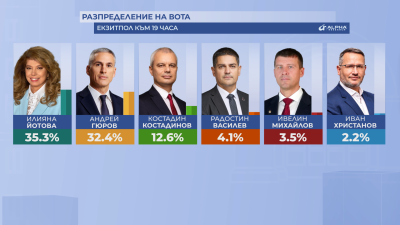
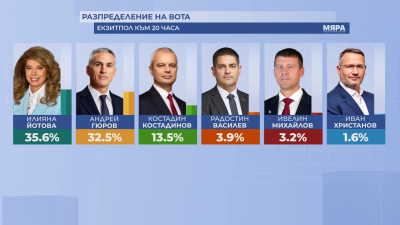
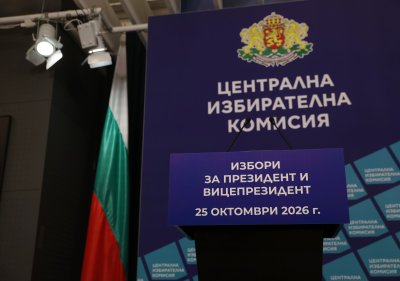
 Central Election Commission: With 7.37% of Polling Station Protocols Processed, Iotova and Gyurov Head to a Run-off in Presidential Election on 1 November
 Илияна Йотова: Илюзия е, че ако не се гласува, можем да извършим промяна в страната
 Историческа победа за студентите, Вучич призна загубата си на парламентарните избори в Сърбия









 Чуй новините
 Подкаст