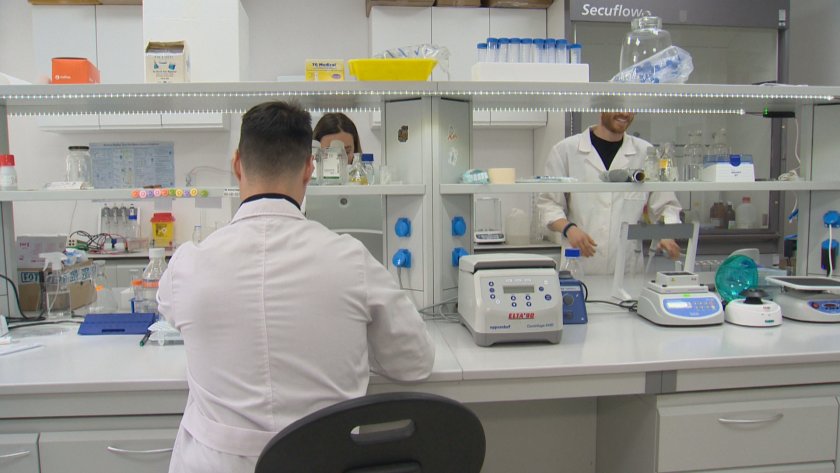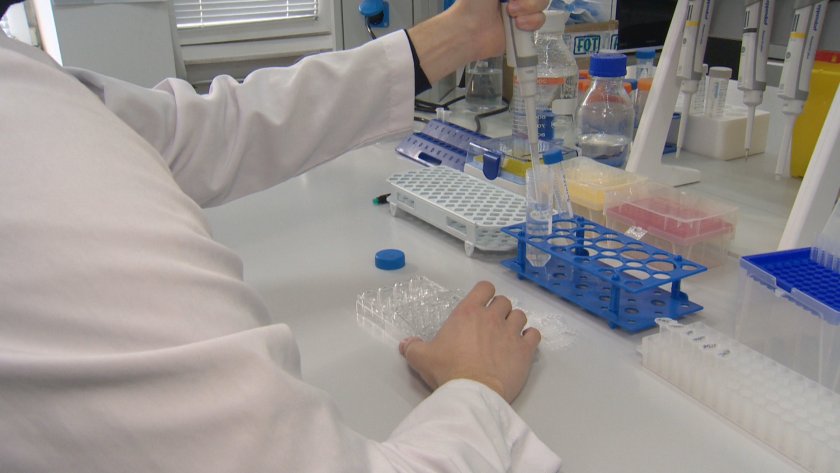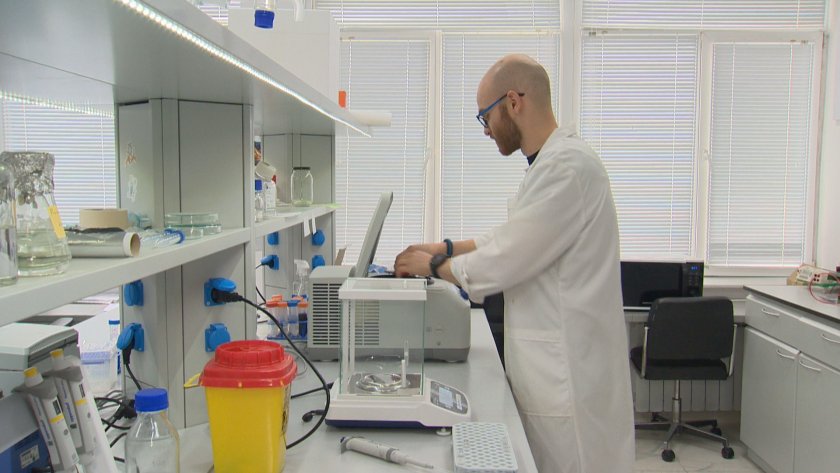

Bulgarians play a key role in uncovering the molecular mechanisms governing DNA organisation in the cell nucleus.
By investigating the causes of the serious hereditary condition Rahman syndrome, scientists are discovering how genetic material is organised in the nucleus and what errors disrupt this organisation. The disease was only described recently, but researchers already have an idea of how it could be treated.

Rahman syndrome is associated with neurodevelopmental problems, distinctive facial features and premature ageing. Although it was discovered only recently, scientists already know which faulty gene is responsible for the condition.

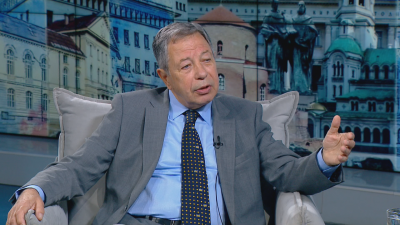
Prof. Stefan Dimitrov, Institute of Molecular Biology, Bulgarian Academy of Sciences: “The mutation causes certain problems with the three-dimensional organisation of our DNA. What we want to understand is exactly what these problems are.”

The DNA strand inside the nucleus is around two metres long, which means it must be folded in such a way that its information can be read correctly. Protein H1.4 performs this function: it organises and secures the DNA strand into symmetrically folded loops. However, the mutated protein loosens these loops, throwing the nucleus into disarray.

Prof. Stefan Dimitrov, Institute of Molecular Biology, Bulgarian Academy of Sciences: “Since there are 30 million of these proteins, determining exactly where they bind is not so straightforward. That is precisely what we are doing now.”
In other words, identifying the error is not enough. To propose a treatment, the scientists need to uncover which mechanisms have been disrupted. But they already have an idea.

Prof. Stefan Dimitrov, Institute of Molecular Biology, Bulgarian Academy of Sciences: “In this case, we believe that enzymes called kinases are involved. These enzymes are essential for the protein’s function, and we can act on their activity.”

By studying the disease, or the functions that have been lost, scientists are also learning much more about the role of the protein. In this case, its role turns out to be far greater than simply holding the DNA strands firmly in place.
Train Services on Tracks 1 to 11 at Sofia Central Station to Be Suspended from 2 November Until March Next Year
Head of Utilities Watchdog: Electricity and Heating Prices Will Remain Unchanged
Платен, отчетен, незавършен: Нов скандал в Сунгурларе заради строежа на дом за хора с увреждания