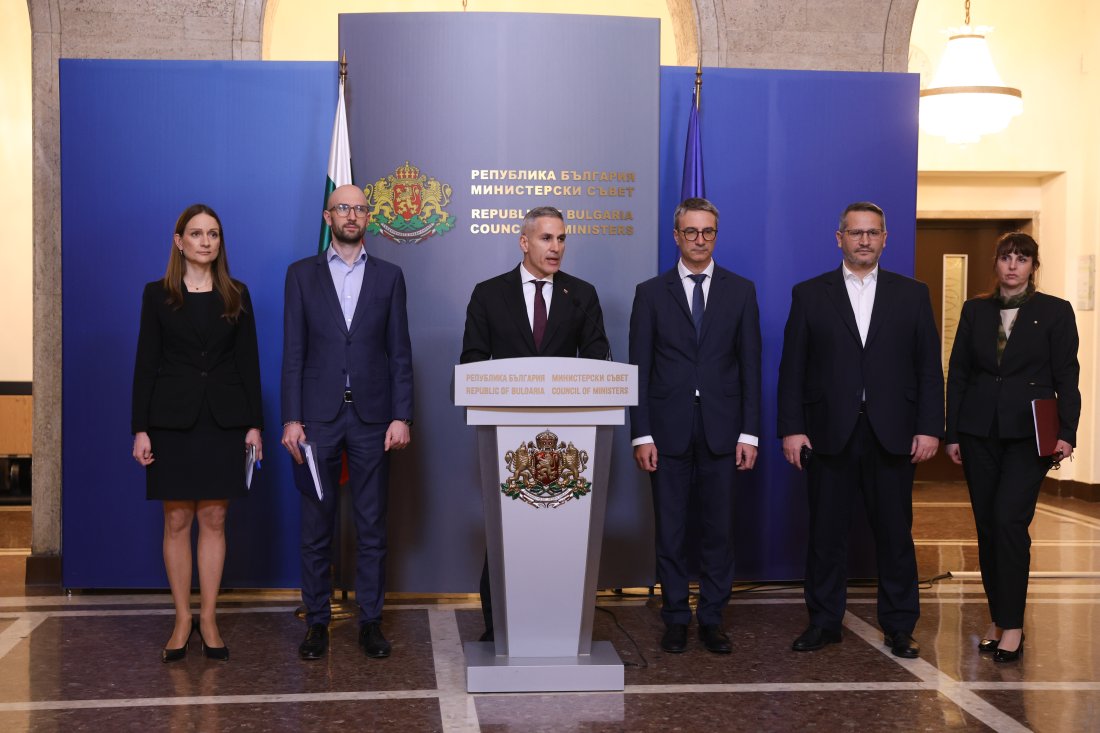
Caretaker Prime Minister, Andrey Gyurov, and government ministers have announced a package of measures in response to the war in the Middle East and rising fuel prices. The measures are expected to cost €100 million and will be fully financed within the state budget, it was confirmed during a briefing by the caretaker cabinet on March 27.
“From the very outset of the crisis in the Middle East, the government acted swiftly, introducing measures to support those most affected — particularly people on low incomes,” said caretaker Prime Minister Gyurov.
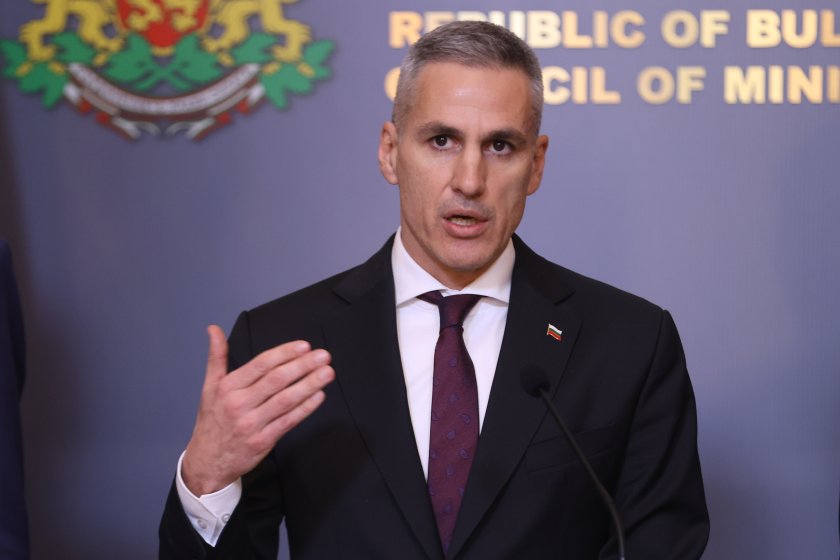
“Since then, the crisis has evolved, and we believe it will take time for conditions to return to normal, both for industry and for households,” the caretaker Prime Minister said.
He added that, for this reason, over the past week the government has developed a package of measures aimed at supporting those most in need, while also ensuring predictability and stability for industry.
The cabinet has identified the sectors and needs that require support.
“We followed two main principles — or rather, three,” Gyurov said. “The first was a highly inclusive approach, involving meetings with representatives from a wide range of sectors across the economy. This took about a week, but it was crucial, as it allowed us to identify precisely where the problems lie and where measures can best help prevent an inflationary spiral.
“The second principle was to avoid so-called ‘helicopter money’ — that is, to avoid indiscriminate support and instead target assistance where it is most needed.
“The third was to develop a range of measures and packages that can be activated if needed. We all hope this will not be necessary, but if the crisis deepens or the return to normal economic conditions is delayed, the government will be able to respond quickly and introduce additional measures at each stage,” Gyurov said.
He said that specific measures have been introduced for transport and agriculture.
“Any upward pressure from higher electricity prices, if such increases occur, will be felt across the entire chain of added value and could lead to additional upward pressure on prices.”
Measures have also been taken for small and medium-sized enterprises.
“We are proposing several ways for these businesses to gain direct access to liquidity, ensuring greater predictability, allowing them to operate more smoothly, and preventing them from passing every shock on to end prices for their customers.”
Gyurov added that the entire approach will be overseen by a task force within the Council of Ministers, which will monitor the situation.
“At each stage, it will assess the level of security and risk in the system, so that additional measures can be activated as needed. It will also oversee the entire chain to ensure there is no distortion and no non-market behaviour within the supply chain.”
The caretaker Prime Minister emphasised that, at this stage, there is no shortage of essential products — whether fuels or food.
“Overall, the support is fully targeted and temporary, provided where there is a need and for as long as it is needed. There is strong coordination between the task force, the government, the private sector, and consumer organisations, and at every moment any non-market behaviour will be closely monitored, with the task force and relevant control bodies ready to respond.”
The caretaker Minister of Economy and Industry, Irina Shotnova, noted that the transport sector has been affected. She added that, for now, toll fees will not be increased.
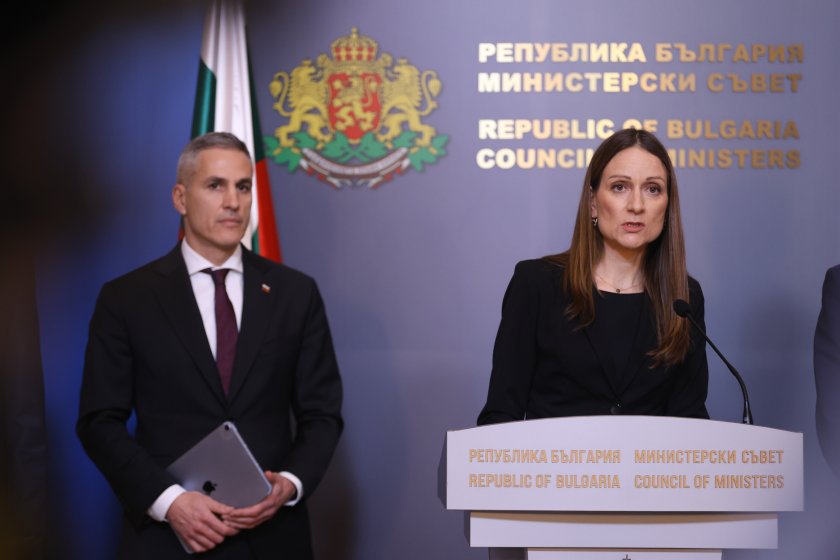
“We are postponing the increase in toll fees from April to June, which means lower costs for the sector, greater purchasing power for people, and no increase in prices for consumers,” Shotnova said.
She added that additional subsidies will be provided for public transport in remote areas.
“For the agriculture sector, we plan to bring forward all payments so that farmers can better handle spring sowing.”
Producers will also be supported through a reduction in fuel excise duties, she noted.
The caretaker Minister of Energy, Traycho Traykov, outlined measures related to electricity:
“Each month, if the price on the free market exceeds 122 euros, all companies will have access to this financing,” Traykov explained.
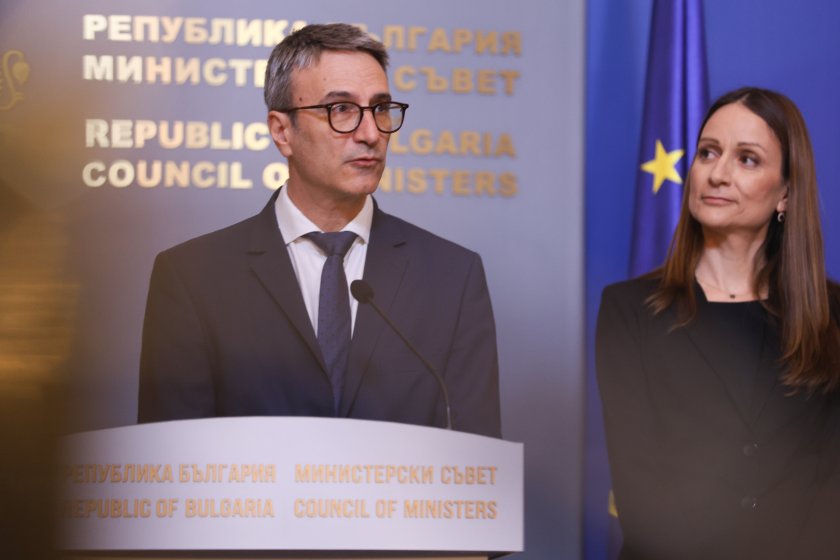
Gyurov summarised that the goal is to support the transport sector so that travel does not become more expensive.
“We will subsidise intercity transport. The aim is to ensure that it does not become more expensive for people to get to work, so that they are not forced to stay at home.”
He added that support for electricity will affect all businesses.
The caretaker Minister of Finance, Georgi Klisurski, outlined the costing of the package of measures.
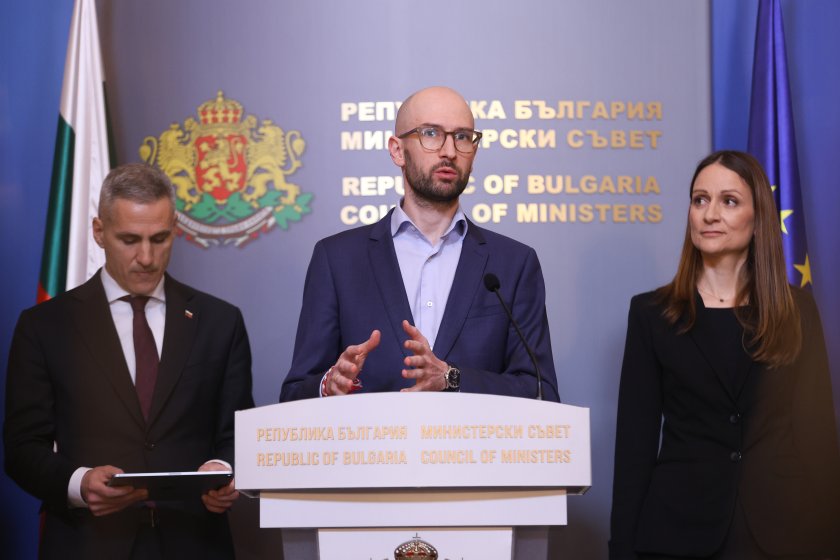
“Some of these measures are funded from the state budget, while others are budget-neutral — for example, a transfer from electricity producers to consumers. But so far, all the measures outlined by the ministers and the prime minister remain within the limits of the budget. I believe they amount to no more than around 100 million euros at this stage.
It is very important that all these measures are targeted at those most in need — both individuals and economic sectors. As the prime minister said, the goal is to protect the most vulnerable citizens and to curb inflation at its source, so that it does not spread further down the chain.”







 Чуй новините
 Подкаст