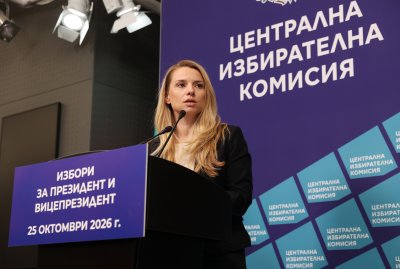
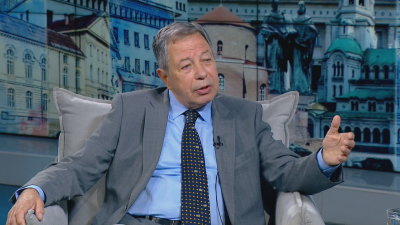
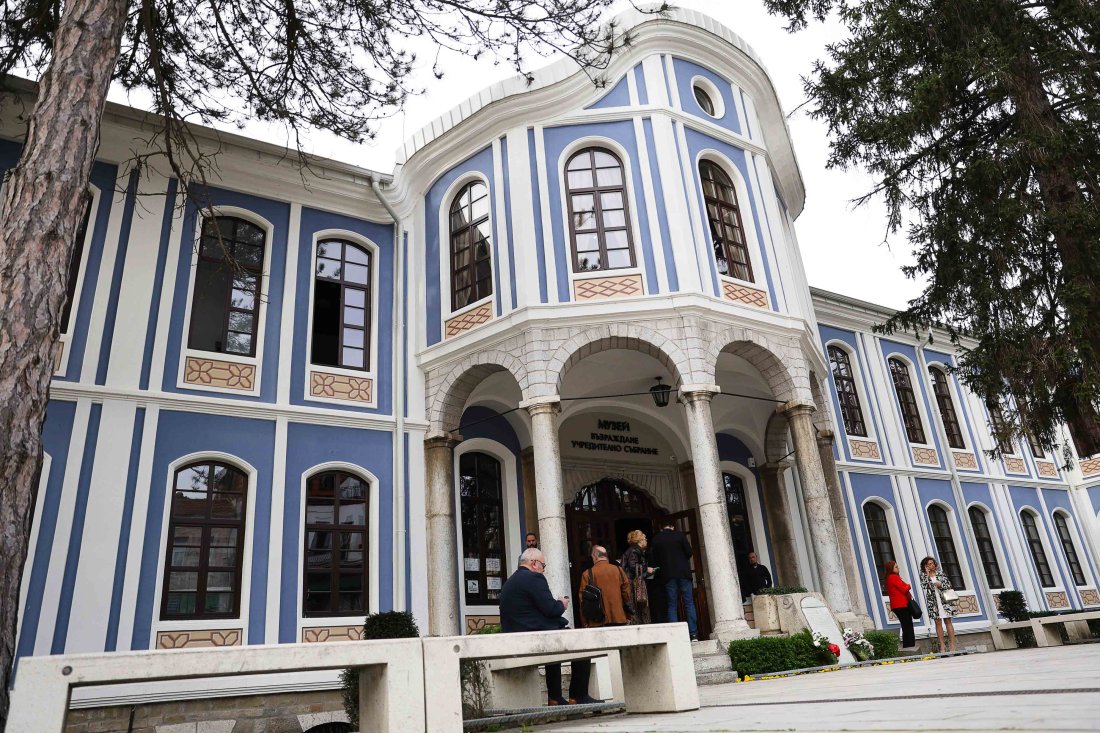
On Constitution Day, April 16, the Constitutional Court marked the 35th anniversary of its establishment. In Veliko Tarnovo, Court President Pavlina Panova brought together all constitutional judges who have served since 1991, noting that through their work they have demonstrated responsibility towards the rule of law, legal principles and citizens. President Iliiana Iotova stressed that any attack on the Constitution is an attack on the very foundations of the state.
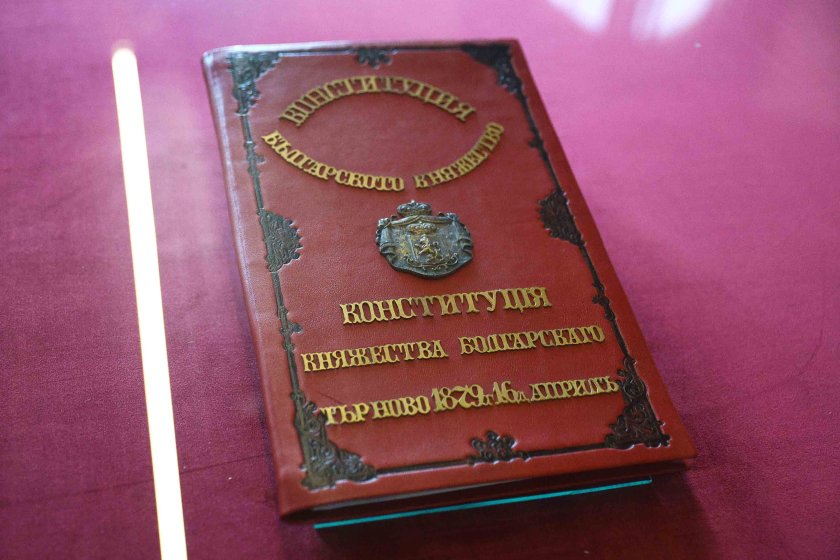
Bulgaria’s first Constitution – the Tarnovo Constitution, adopted on this date in 1879 – did not provide for a Constitutional Court. At the time, it was the National Assembly, as the law-making body, that determined whether laws complied with the Constitution. As a result, the Constitution existed formally, but was not effectively operative.
The decision under the fourth Constitution to establish a Constitutional Court was intended to ensure that the Constitution would function as a fully effective legal instrument, not merely a political one. The Court’s practice over the past 35 years shows that this step was necessary, as numerous unconstitutional provisions adopted by successive parliaments have been struck down by the Constitutional Court.
Today, in the building of the Constituent Assembly, constitutional experts and statesmen highlighted precisely this point – that the Constitutional Court has succeeded in safeguarding the fundamental law, statehood and citizens’ rights.
Exactly 147 years ago, Bulgaria’s first Constitution – the Tarnovo Constitution – was adopted. It was suspended twice and violated on numerous occasions.
Pavlina Panova, President of the Constitutional Court, said: “The Tarnovo Constitution embodies the values and principles of limited legislative power and the rule of law, but it does not provide for an independent judicial body to ensure their observance. Oversight was purely political.”
Constitution Day is being marked in Veliko Tarnovo.
Lessons from history led to the decision in the fourth Bulgarian Constitution, adopted in 1991, to provide for a Constitutional Court tasked with safeguarding the fundamental law.
Prof. Yanaki Stoilov, Constitutional Court judge: This decision was adopted with broad support, and this is due to the awareness among members of parliament that the establishment of a Constitutional Court transforms the Constitution not only into a political but also into a fully-fledged legal instrument."
Over the past 35 years, the Constitutional Court has struck down a number of unconstitutional provisions and decisions adopted not on legal grounds, but on the basis of political expediency.
Pavlina Panova, President of the Constitutional Court: “The Court has developed the substance of the principle of the separation of powers, emphasising that power restrains power by using the prerogatives granted to it, thereby blocking the path to arbitrariness in the exercise of state authority.”
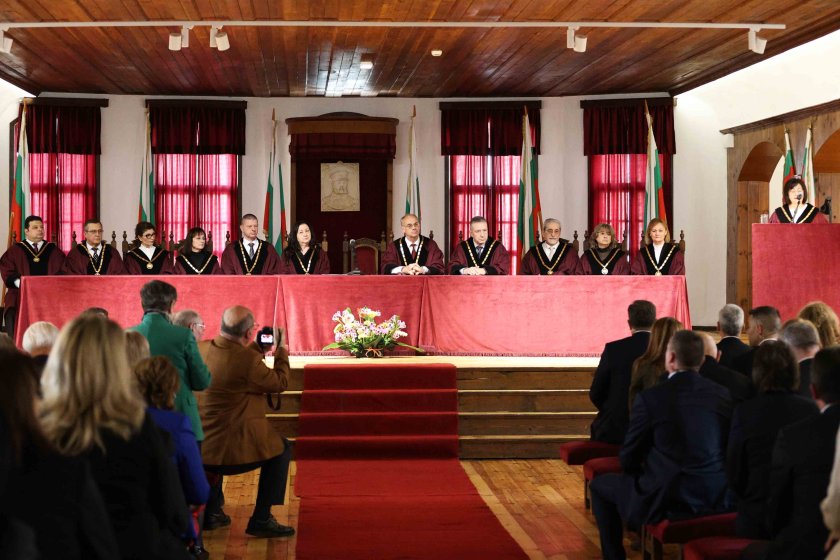
The Constitutional Court has even overturned amendments to the Constitution itself because they conflict with the principles of the rule of law.
Iliana Iotova, President of the Republic of Bulgaria: “Today, there are countless people - dozens of them - who consider themselves great experts on reforming our justice system. Attacking the Constitution means attacking the foundation of the state. We have come to understand that such encroachments consume anyone who undertakes them recklessly, while the bitter consequences are borne by all of us. The latest amendments to the Constitution are of an egregious nature; a significant part of them has been rejected by the Constitutional Court, while the others that still exist not only fail to work and hinder the functioning of institutions, but also send a troubling, offensive and harmful message to Bulgarian citizens – that the Constitution can be amended by anyone as they wish.”

Rights are guaranteed when the guardians of the Constitution uphold the rule of law and do not allow anyone to place themselves above the law.
Andrey Gyurov, caretaker Prime Minister: “It is worth recalling today that Bulgaria chose Europe in the very first days after its liberation from the Ottoman Empire, and that this choice was reaffirmed after our liberation from totalitarian communism of Soviet model with the adoption of the Constitution of 12 July 1991. Both the Tarnovo Constitution and the one adopted after the democratic changes of 1989 express the deep aspiration of the Bulgarian people – to live in a free and just society.”

Through its decisions, the Constitutional Court demonstrates that statehood can be upheld through law, rather than through force.








 Чуй новините
 Подкаст