If the conflict in Iran continues longer than the United States anticipates, the consequences for the global economy are expected to be significant, with inevitable political repercussions across EU member states.
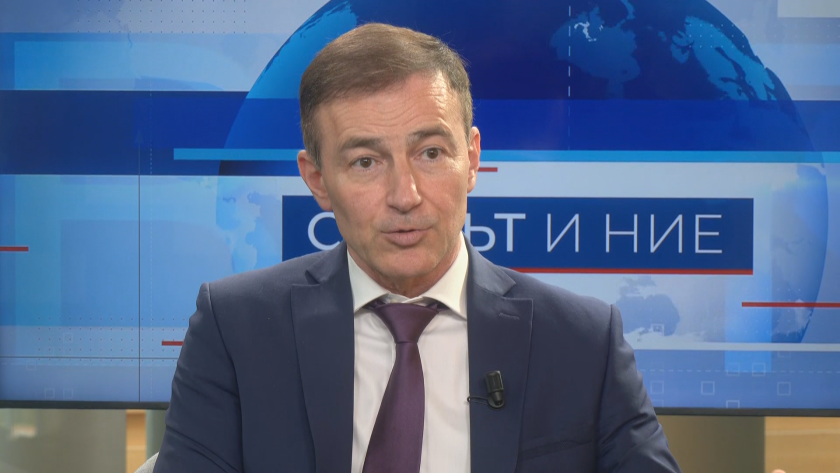
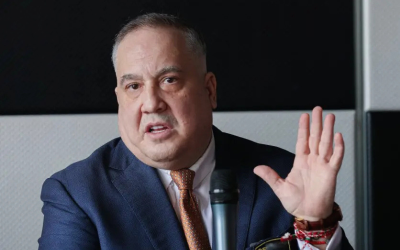
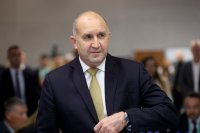
Evgenia Atanasova talks to MEP Andrey Kovachev of the European People's Party.
Evgenia Atanasova, BNT: “Mr Kovachev, EU countries have reacted differently to the US and Israeli strikes in Iran. Do you believe a common European position is necessary, and is it achievable?”
Andrey Kovachev, MEP: “Absolutely – it both exists and must exist. In the European Parliament, we passed several resolutions by a large majority condemning the barbaric regime in Tehran, which is committing genocide against its own people. Tens of thousands of Iranians have been killed by the regime; they demand change and democratisation of the regime.
The European Parliament supports the Iranian people in their pursuit of reform. After decades under a severe, theocratic, and repressive regime that crushes any desire for freedom, openness, and expression—particularly the rights of women—the Parliament has explicitly backed Iranian women. We awarded the Sakharov Prize and recognised their achievements with the Nobel Prize. This is our position, and as the European People’s Party, we have repeatedly expressed support for the democratisation of Iran.”
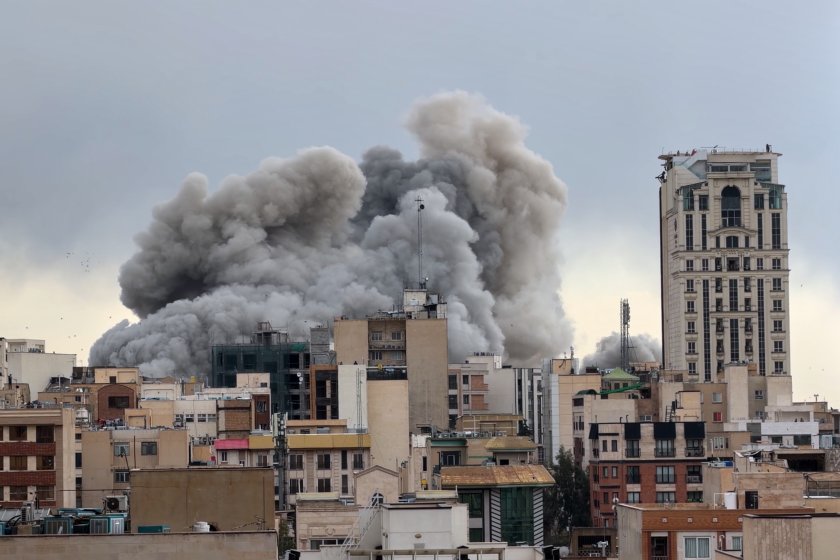
Evgenia Atanasova, BNT: “Could this strong moral support make a difference without a military engagement? Is there a risk that Europe could be drawn into a hot war?”
Andrey Kovachev, MEP: “No, European countries are not participating in military actions. However, we should recognise that the regime in Tehran is attempting to acquire enough enriched uranium to produce a nuclear weapon.
At the same time, Iran is mass-producing missiles of various calibres and ranges, including long-range missiles capable of travelling thousands of kilometres. This clearly poses a threat, including to European nations. Such threats should be stopped, and Iran should not have the capability to launch them.
Moreover, the Iranian regime is at the core of numerous terrorist organisations across the Middle East: Hamas, Hezbollah, Islamic Jihad, and the Houthis in Yemen. All of this operates through the tentacles of the organisation officially designated as a terrorist group — the so-called Islamic Revolutionary Guard Corps, which emerged following the coup carried out during the Iranian Revolution in 1979.”
Atanasova: “Do you think this new conflict could divert attention, financial, and military resources away from Ukraine, where the EU has been trying to help Kiev and rebuild for years?”
Andrey Kovachev, MEP:
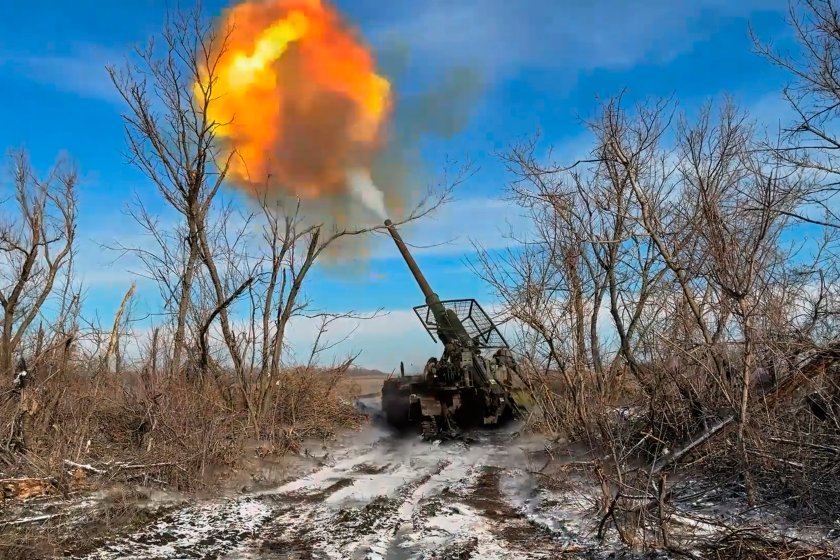
“Well, the two are definitely connected. They are linked. Iran is supporting Russia’s aggression against Ukraine. Iranian drones are being used to destroy infrastructure and carry out killings in Ukraine. This means that the regime in Tehran is effectively aiding the regime in Moscow in its war against Ukraine and its citizens.
And we should remember that the citizens of Ukraine include Ukrainians, Russians, Bulgarians and many other ethnic groups who are subjected to daily attacks by Russian-Iranian drones. This has been happening continuously since 2022.
That is why these two regimes — in Tehran and in Moscow — are closely linked. We also see how the regime in Moscow supports and backs the regime in Tehran. They have effectively formed their own axis — involving Venezuela, Cuba, Iran and North Korea — which supports Russia’s aggression in Ukraine.”
Evgenia Atanasova, BNT: “The energy factor should not be overlooked. There appears to be a willingness within the administration of Donald Trump to ease restrictions on Russian energy resources. Could this also become a European need?"
Andrey Kovachev, MEP:
“I do not see such efforts to ease restrictions. On the contrary, we have seen sanctions imposed on Lukoil, Gazprom Neft and many other Russian energy giants. Through the sale of these natural resources, revenues that should benefit the citizens of the Russian Federation — people of many different ethnic backgrounds across this vast country — are instead being channelled into armaments.
At present, around 10% of Russia’s gross domestic product is being used for the production of military equipment. But this is not equipment intended to defend the internationally recognised territory of the Russian Federation. Rather, it is being used for operations beyond its borders, aimed at seizing territories that do not belong to Russia under international law.”
We have repeatedly stated — and there is a decision at the level of the European Union — that we must reduce our dependence on Russian energy sources as much as possible and find alternative options for our economies. Work in this direction is already under way.
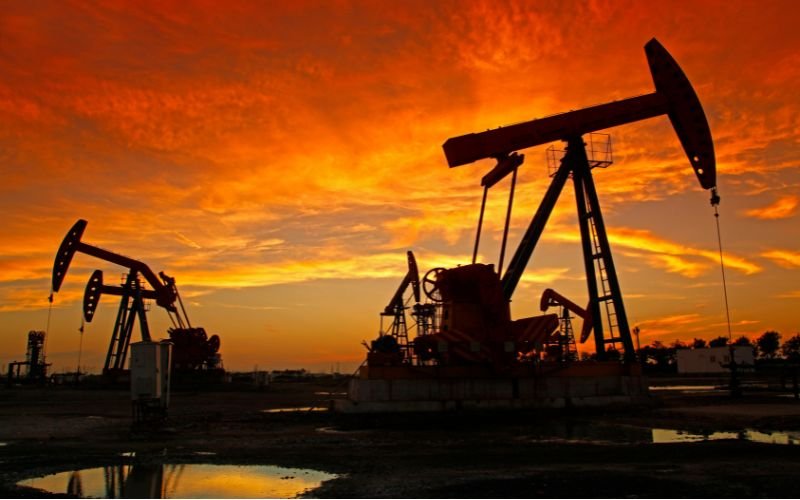
At the same time, the war in Iran will inevitably affect global oil prices, which is why these supply routes must be secured as quickly as possible. I believe the U.S. shares this desire and intends to enforce it, including by force.





 Чуй новините
 Подкаст