Unique find at risk of deterioration without timely restoration

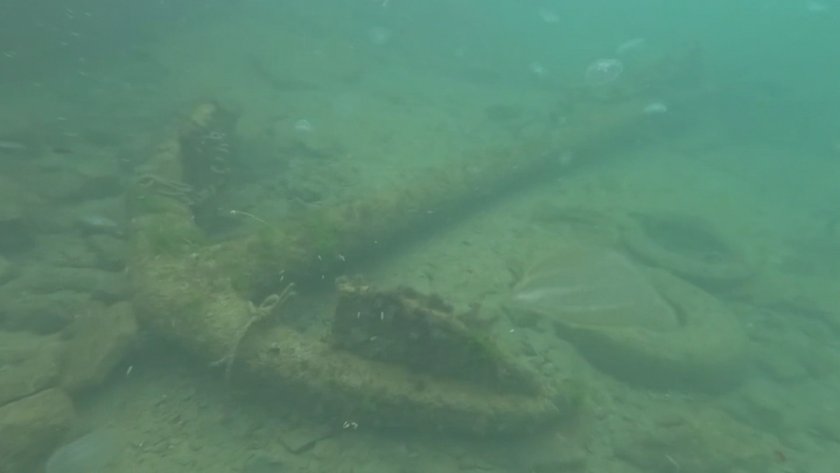
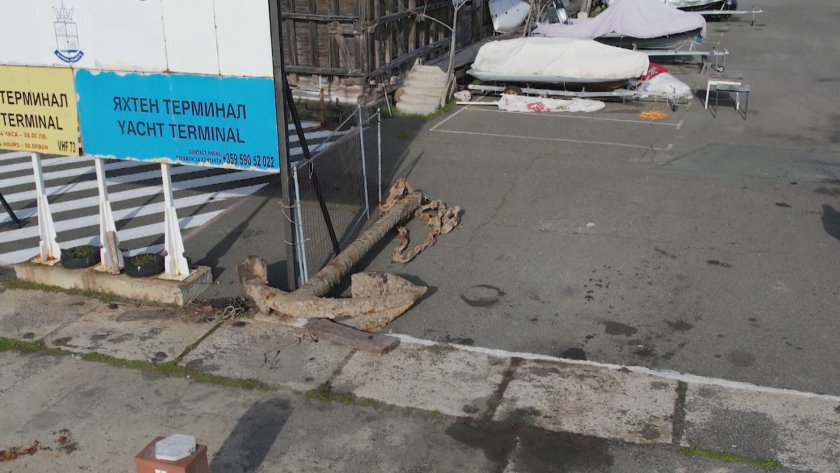
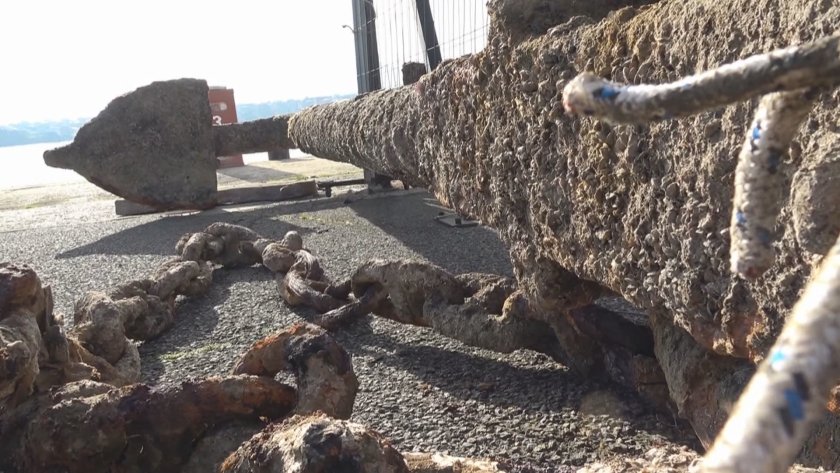
A massive anchor dating back to the Crimean War has been discovered in Tsarevo Bay. It was brought to the surface by divers and, according to expert assessments, is one of the largest ever found not only in the Black Sea but also in the Mediterranean. The municipality plans to display it at the port after restoration. However, underwater archaeologists warn that the anchor was raised too hastily, placing the find at risk.
Amid discarded car tyres that have fallen from boats in Tsarevo Bay, stumbling upon such a discovery seems almost unbelievable. That is why the diver who found it initially could hardly believe his eyes.
Emil Bachev, diver:
“As soon as I saw it, I realised it would be far better for this anchor to be brought up and made accessible to Tsarevo, to the town and to its people.”
Emil shared his discovery with the director of the local museum and with the municipality, who encouraged him. But raising the anchor from a depth of nine metres proved to be a challenge.
Emil Bachev:
“At first, I estimated it weighed around three tonnes. Then, when we started lifting it with three-tonne lifting bags, we almost had an accident.”
Experts believe the anchor dates from the 19th century, the time of the Crimean War, when many British ships sailed in the Black Sea. It is of the Parker type and is certainly not Russian.
Dr Atanas Orachev, curator at the Anchor Museum in Ahtopol:
“I am almost certain that this is the largest anchor ever discovered in the Black Sea, and possibly in the Mediterranean as well. It has an ideal shape and very high-quality iron, whereas Russian iron is somewhat different.”
It is thought that a British merchant ship sought shelter from bad weather in the only relatively calm bay along the Strandzha coast and dropped anchor there.
Dr Atanas Orachev:
“Due to the specific nature of the coastline and prevailing winds, a major storm can suddenly arise, and they would have had to cut the anchor loose quickly.”
After nearly 200 years on the seabed, preserved under a layer of silt, the anchor is now set to become a feature of the port, with the municipality committing to its restoration.
Deniz Dikhanov, Deputy Mayor of Tsarevo:
“Once we know what is required and what restoration techniques are needed, we will be able to make an informed decision.”
According to underwater archaeology experts, however, raising the anchor was premature, and conservation should have begun immediately.
Assoc Prof Nayden Prahov, Head of the Centre for Underwater Archaeology:
“Otherwise, it will soon begin to deteriorate and degrade. It has absorbed salts, and as it dries these crystallise, leading to irreversible damage to the anchor.”
Under UNESCO conventions, any object that has remained underwater for more than 100 years is considered cultural heritage, and its recovery must be coordinated with multiple institutions and accompanied by an archaeological study.
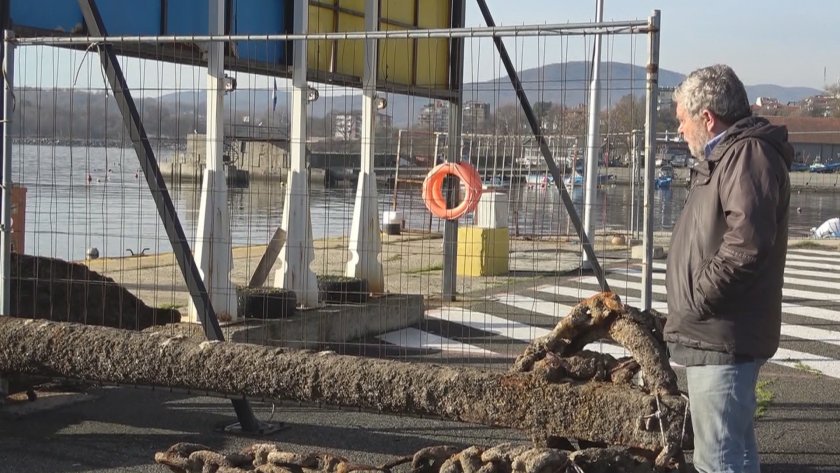
Assoc Prof Nayden Prahov:
“The moment it was raised, the context of its discovery—where and how it lay on the seabed—was lost. That information is now gone.”
According to UNESCO recommendations, the best option for such artefacts is often to leave them in situ, preserved in their original context on the seabed.


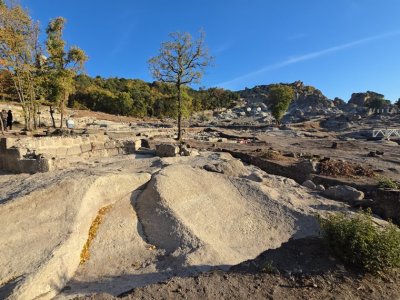
 Latest Archaeological Finds at the Ancient Thracian City of Perperikon (see pics)
 The Most Outstanding Students from Raina Kabaivanska's Class Performed at the Sofia Opera
 Huge Interest Continues at Second 'Undercover' Season 6 Pre-Premiere Screening
 Гледайте първия епизод от новия, шести сезон на култовия сериал "Под прикритие" по БНТ










 Чуй новините
 Подкаст