On 3 February, the Orthodox Church commemorates St Simeon the God-Receiver and the Prophetess Anna. Their feast is observed on the day following the Presentation of the Lord, celebrated on 2 February.
According to tradition, Simeon was one of the seventy scholars who translated the Old Testament from Hebrew into Greek at the request of the Egyptian ruler Ptolemy II Philadelphus (285–246 BC). In Bulgarian folk tradition, the day is known as Winter Simeon’s Day, while its summer counterpart is celebrated on 1 September, when people bearing the name Simeon mark their name day.
Winter Simeon’s Day, like the Winter feast of the Virgin Mary, is traditionally observed by pregnant women, young brides and mothers. Folk belief holds that the nature of the first visitor to a household on the day foretells whether livestock born during the year will be male or female.
The day is considered one of the most ominous in the folk calendar. In some regions it is known as Simeon the Marker, believed to bring wounds or marks upon people. For this reason, tradition warns against handling sharp objects.
3 February is also the third of the so-called “Wolf Days”, during which no work involving wool is done, and ash or rubbish is not thrown outside, so as not to anger the wolves and provoke attacks on livestock. It is also customary not to lend anything or take items out of the home, to prevent prosperity from “leaving the house”.


 Макрон в обръщение към нацията: Тези, които търсят унищожението на Републиката, ще бъдат подведени под отговорност
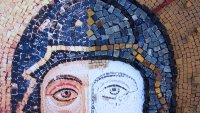 Къде е храмът "Успение Богородично", в който е служил патриарх Евтимий?









 Чуй новините
 Подкаст