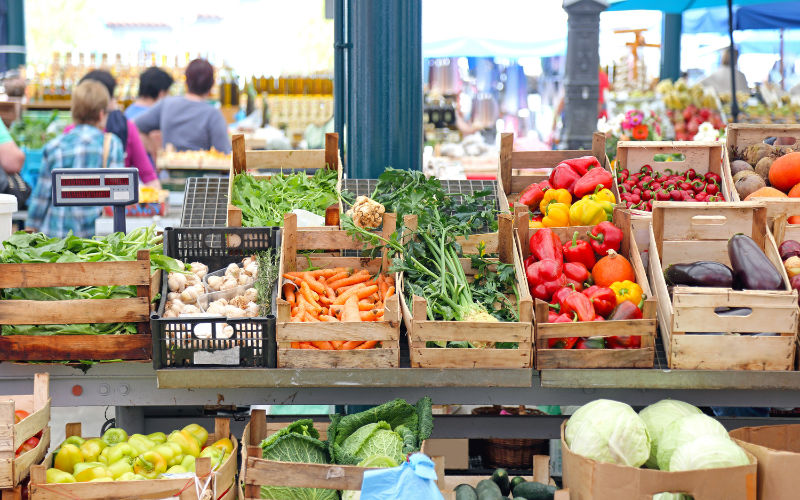
Many Bulgarians are calculating that shopping in Greece is 20–30% cheaper than in Bulgaria, prompting some to travel across the border to buy essential groceries for their households.
A team from BNT investigated whether this is indeed the case by comparing the cost of a typical shopping basket in Thessaloniki with that in Blagoevgrad (Southwestern Bulgaria).
In a supermarket in Thessaloniki, a basket of basic goods — including fresh milk, feta cheese, eggs, cooking oil, bread, instant coffee and laundry detergent — came to a total of €36.58. Shoppers from Bulgaria who regularly visit the area estimate that the same items are roughly 20% more expensive at home.
Many Bulgarians say they are drawn to shopping in Greece because prices there are between 20% and 30% lower than at home, leading some to cross the border to buy essential goods.
“People are looking for cheaper options — that’s only natural,” says Vesela Bagasheva. “Perhaps the quality is much higher too — in chocolate, food products and fish. Everything seems to be of a higher standard than ours.”
Ivan Grubchev adds: “A lot of people come here to shop. The essentials — olives, fresh fish from the market, even water. There are quite a few items that are cheaper than in Bulgaria. I think the difference is around 20%.”
A comparison of the same shopping basket in Blagoevgrad shows a different picture. The total comes to €48.30 — roughly 30% more than in Greece.
Outside a supermarket, one shopper, Tsvetan, says prices in Bulgaria are too high relative to his income and that he relies on discounts to manage his budget.
Tsvetan says he struggles to make ends meet on his pension of €580 a month.
BNT: Which items are the most expensive for you?
Tsvetan: “Dairy products are the most expensive — yellow cheese, milk, cheese, and fish are very costly.”
The biggest price differences between Bulgaria and Greece are seen in laundry detergents, seafood, olive oil, coffee, pasta, and chocolate products.
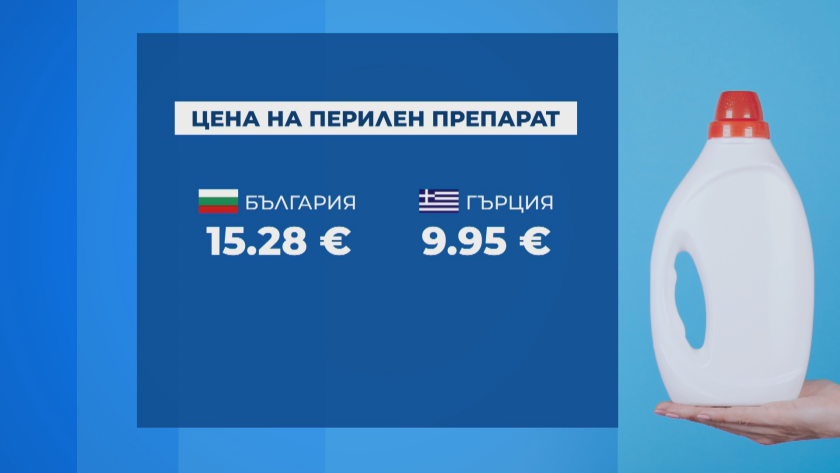
For example, a laundry detergent of the same brand and size costs €15.28 in Blagoevgrad, compared with €9.95 in Thessaloniki.
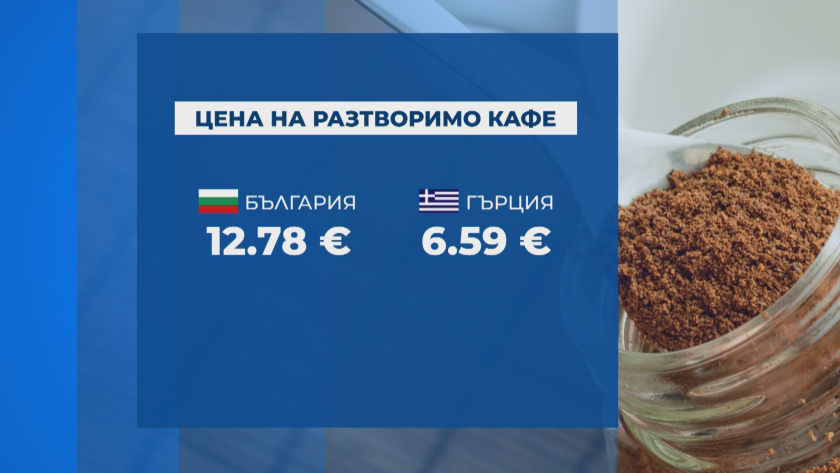
Instant coffee in Blagoevgrad costs €12.78. In Thessaloniki, the price is almost half — €6.59.
“Speaking as consumers, all we can say is that it is very, very expensive,” says Vesela Bagasheva.
Gergana Stambolieva adds: “It is absolutely expensive. Prices have levelled out — what used to be 1 lev is now effectively 1 euro. Everything is expensive, while wages remain the same.”
Bagasheva also criticised the cost of basic goods: “Fresh milk should not cost 4 leva per litre — even if it is imported. Bulgarian producers are throwing away fresh milk. It is unjustified.”
Although inflation is also felt in Greece, shoppers say there is a strong social policy in place to support lower-income households. The government periodically reduces the cost of some essential goods and provides additional support programmes for families.
According to Ivan Grubchev: “There are constant programmes that provide support — rent is paid, as well as electricity and water bills. For those on low incomes, there are also discounted utility rates, with reductions of around 20% to 30%.”
It is not only social policies and lower prices that attract people to Greece, but also higher wages. From today, the minimum wage in Greece stands at €920, compared with €620.20 in Bulgaria since the beginning of the year.







 Чуй новините
 Подкаст