A young woman, Maria Sutic, voluntarily joined the ranks of Georgi Benkovski’s Flying Detachment during the April Uprising. She remains in history as the only female chetnik (member of a detachment, a rebel) who, as noted by Zahari Stoyanov in his memoirs, shared the hardships of the men on equal terms.
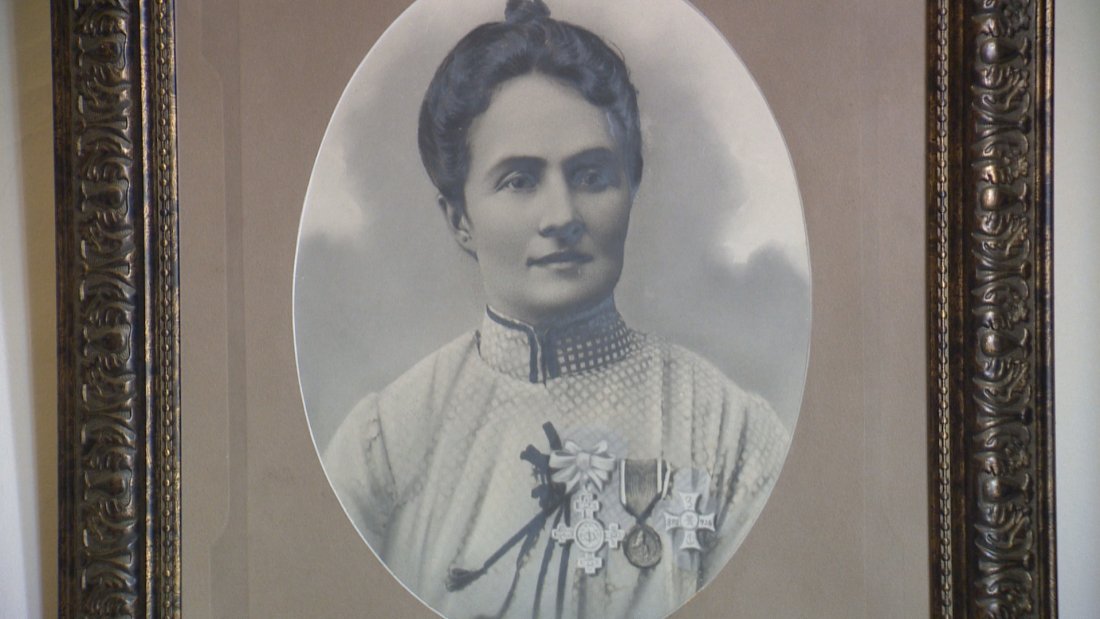
Such medals for bravery in combat would normally adorn military uniforms rather than lace dresses, yet they were indeed awarded to Maria Sutic for her merit — the only woman fighter in Benkovski’s Flying Detachment.
BNT: The portrait, where did you get that?
Rumyana Doneva - curator at the Museum of the Revival Period in Plovdiv: "Again from the daughter of Nyonka Sutic. She donated them."
Maria, known affectionately as Nyonka, lived and died in Bulgaria's second largest city of Plovdiv, although she was originally from Pazardzhik. At the age of 15, she entered the household of Georgi Konsulov in Belovo, an entrepreneur and assistant to Vasil Levski in the establishment of revolutionary committees in the region. As the final stop on the then-under-construction Baron Hirsch railway, Belovo played an important role in the revolutionary movement. It is no coincidence that Kabakchiev was the station master there.
Rumyana Doneva said: “All Bulgarians working on the railway deliberately applied for such positions. The idea was that when the uprising began, there would be a person with a red flag to stop the army coming from Constantinople.”
In Belovo, Maria fell in love and married Ivan Sutic, from Dubrovnik and one of the railway builders. The Dalmatians actively supported the preparation of the uprising, and it is therefore not surprising that during one of his tours to raise the villages in revolt, Benkovski stopped at the home of Maria and Ivan Sutic.
Sevdalina Popova - director of the museum in Belovo: “There he saw on the wall a treasured rifle and a very fine revolver. He told the host: I want to buy this rifle and this pistol… Sutic replied: I will take them, and together with my wife we will come with you.”
The episode is also recorded in Zahari Stoyanov’s memoirs, who later described how the 18–19-year-old Maria shared the hardships equally with the men. She also took part in battles, according to a previously unknown witness statement in a later document confirming her participation as a chetnik (memebr of the detachment).
Rumyana Doneva: “About ten Dalmatians joined us, including Ivan Sutic and his wife Nyonka, who followed the detachment until it was broken up by Ottoman regular troops and bashi-bazouks, taking part in all the battles where the detachment encountered the enemy.”
Captured by the Ottomans, Maria and her husband spent months in prisons, beaten and tortured, yet resisted attempts to be forcibly converted to Islam. Shortly afterwards, her husband died. At the age of 50, she remarried the head of the post office in Plovdiv and adopted and raised his children.
They also preserved this portrait of her — previously unknown — showing her with a steady gaze, proudly bearing the burden of being the only woman in Benkovski’s detachment.
Battle of Dryanovo Monastery Remembered ahead of April Uprising Anniversary






 Чуй новините
 Подкаст