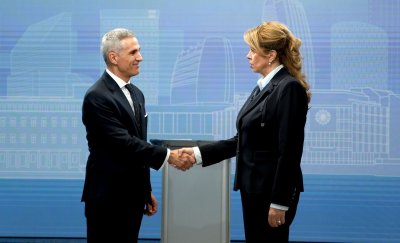
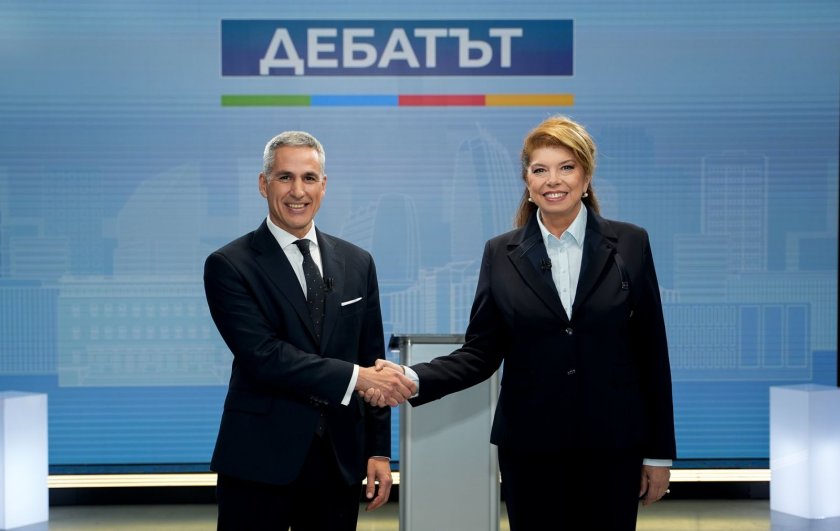
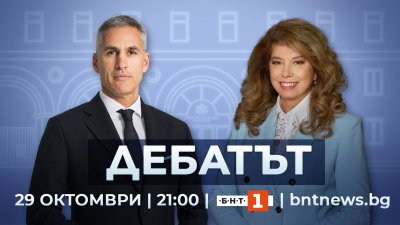
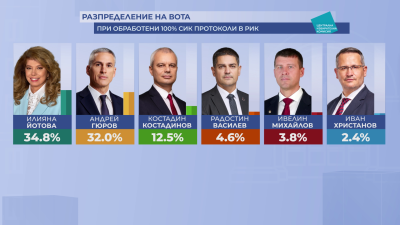
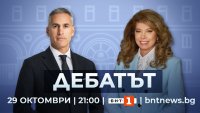
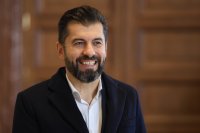
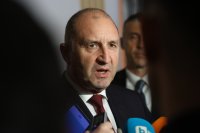
The only debate between the candidates for President of the Republic of Bulgaria, Iliana Iotova and Andrey Gyurov, has been broadcast live on Bulgarian National Television on October 29. The debate was moderated by Poli Zlatareva.
The only debate on the public service broadcaster has given Iliana Iotova and Andrey Gyurov the opportunity to reach the widest possible audience ahead of Sunday’s run-off on 1 November.
In addition to BNT 1, viewers could watch the debate live on BNT 4, on the bntnews.bg news website, on the BNT news Facebook page and on the Bulgarian National Television YouTube channel.
The debate covered issues of importance to society in which the presidential institution plays a key role, as well as the candidates’ policies, views and values.
The low voter turnout is actually a result of the fact that throughout the entire campaign, people were frightened with talk of war and imaginary enemies, and the natural reaction was to stay home. I, however, will not scare them, and I want to say something else—that Bulgaria can and deserves much more. This was stated at the beginning of the debate by presidential candidate Andrey Gyurov.
Andrey Gyurov, presidential candidate: “The presidential institution is currently like a piano in the living room: people walk around it, but nobody plays it. Yet the President can do a great deal. The President can bring together around one table the talent of the nation – young people, entrepreneurs and scientists – and unite them around issues that are bigger than a single term in office and bigger than everyday political battles. The President can act as a counterbalance to a government when it gets too carried away with itself. At present, we have one party holding a majority in Parliament and controlling the executive branch. That is why it is so important: go out and vote, and take someone with you.”
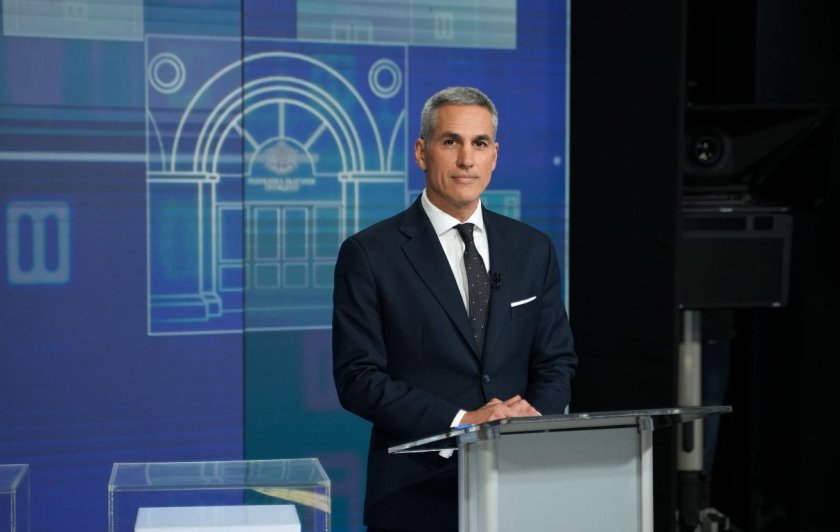
“I would like to begin by expressing my immense gratitude to all Bulgarian citizens who went out and voted on 25 October. And I would urge them to exercise one of the most fundamental human rights – the right to vote and choose. I expect many more of them to do so next Sunday,” said presidential candidate Iliana Iotova.
Iliana Iotova, presidential candidate: “And since Mr Gyurov brought up the topic of music, I would say that the presidential institution has, for a long time now – since the beginning of 2017, Mr Gyurov – been a very well-tuned piano, playing melodies that people expect and enjoy, and which are not played at the ear-splitting volume of so many others around us, who have been shouting all this time.”
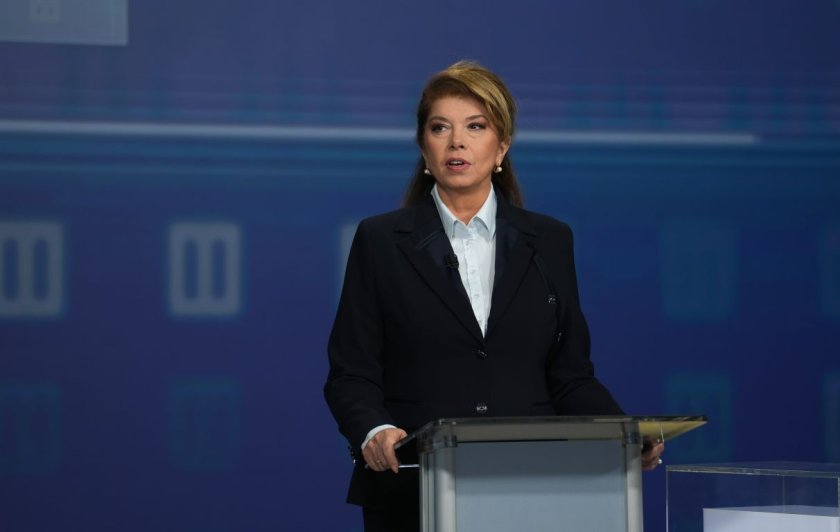
Regarding support and efforts to win votes in the second round, Iotova recalled that her candidacy had been backed by “Progressive Bulgaria”, the Bulgarian Socialist Party (BSP), VMRO, the National Movement for Stability and Progress (NDSV), Dr Dertliev’s party and a broad initiative committee whose members vote for different parties in parliamentary elections. However, they had supported her candidacy because they had always worked for Bulgaria and because they had consistently worked together to achieve positive results for the country.
From the very beginning, Andrey Gyurov and Georgi Kandev had decided that their candidacy would be based entirely on civic principles.
Andrey Gyurov, presidential candidate: "We built a very broad initiative committee that includes no politically affiliated individuals, no political leaders, unlike Mrs Iotova’s initiative committee, and no representatives of the former State Security service. I believe this struck a chord with Bulgarian citizens. As for how well-tuned the piano was, we can see the answer in the loss of a huge number of votes since the parliamentary elections. We have never sought support from party headquarters or party leaders. We are reaching out to Bulgarian citizens and expect their support.”
FOREIGN POLICY
Regarding Bulgaria’s foreign policy, Gyurov said that the principle was very simple, explaining why:
Andrey Gyurov, presidential candidate: “When we are not a major power, we naturally have to rely on the principle that the rules apply equally to everyone. The most fundamental principle of international law is that borders must not be changed by force. This is the basic principle we must follow, regardless of which conflict is involved, because it is our safeguard. If we allow or accept borders being moved in one conflict, contrary to how they have been established, it will mean that no other country, regardless of which continent it is on, will thereafter be secure in its sovereignty and territorial integrity.”
“I do not accept the simplistic principle that ‘we are – or are not – a major power’. We are an equal member of the European Union,” said Iliana Iotova. Our voice carries exactly the same weight as that of every other EU member state, just as it does on the international stage as a sovereign country, she added.
“If you simply say 'yes' to everything, as has been happening in Bulgaria for decades, then you simply have no voice. I assure you that in that case, no one pays any attention to Bulgaria’s position, or indeed to anyone else’s.”
Iliana Iotova, presidential candidate: “But times have changed considerably. Times have changed within the European Union, too. Today, the more convincing you are in what you say, the more you can achieve. Yes, your position may not contradict something written somewhere in some bureaucratic office. But if you are sufficiently well prepared, you can easily find allies and change policies. This is not anti-European policy. On the contrary, it is a way and a style of working that makes European policy even stronger.”
Iliana Iotova recalled that she had raised the issue of security in the Black Sea before the United Nations General Assembly.
Iliana Iotova, presidential candidate: “I did this before the leaders of 193 countries. Because they know very well that food security on at least two other continents depends to a large extent on these routes across the Black Sea. They know that ships need to be insured and that insurance premiums rise when navigation is not sufficiently safe. Fewer and fewer companies want to use these routes. I spoke about all of this. And I think that when I returned to Bulgaria, I should at least have received some recognition.”
According to Andrey Gyurov, the second principle is to work with allies. He explained:
“When we sit at the table of the European Council, there are 27 people there, and when we are one against 26, our voice is not strong. That is not a strong position. We must work to build coalitions and talk to our allies before we need their support.”
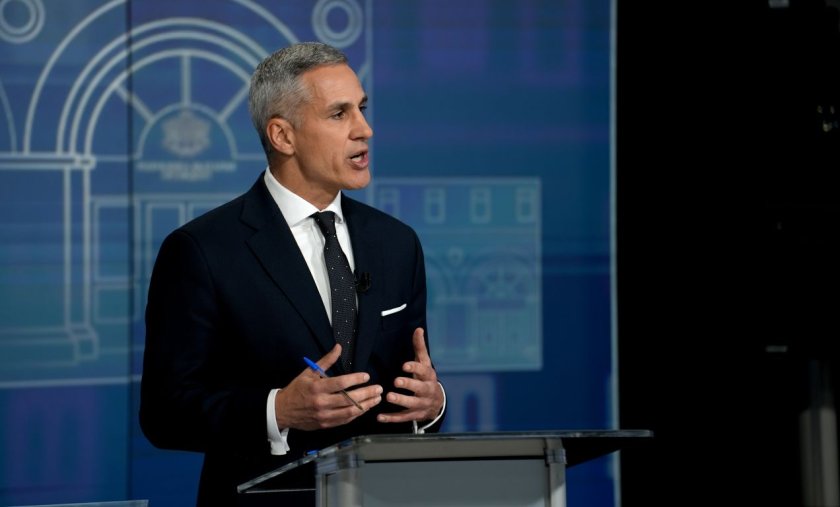
As an example, he cited the French proposal concerning the Republic of North Macedonia:
“When we were sitting on the sidelines with our veto, everyone across the EU was against us. With the French proposal, what we actually managed to do was change the question: it was no longer Bulgaria versus the EU, but North Macedonia versus the EU. In other words, we managed to turn our position into the position of the EU, which put us in a much stronger position than when we impose a veto.”
According to Iliana Iotova, she views all international decisions and statements, as well as every forum in which she participates, primarily through the prism of Bulgaria’s national interests. Commenting on the war in Ukraine, Iotova said:
“I have always believed that we, as the large European family of 27 countries within the European Union, should have our own proposal for what peace in Ukraine should look like. Unfortunately, to date, we have not contributed a single line on this matter. And not to mention that Europe has, I say with great regret, been somewhat pushed to the sidelines of the entire process.”
She also disputed Andrey Gyurov’s statement that Bulgaria had withdrawn from an agreement on protection against drones:
“I do not know what you mean when you refer to the anti-drone defence system. Perhaps that is my question to you, because some very serious clarifications are needed here. Secondly, I cannot remember when Bulgaria has ever vetoed anything. On the contrary, we have participated in drafting all the documents in every format in which we are involved.”
The government submitted the documents for participation in this programme, Iotova further recalled. “Yes, the Defence Minister made a statement about how much it would cost Bulgaria, and despite that, we did not formally register our participation. In addition, there are many other systems, such as the IRIS system, in which we are participating.”
TENSIONS IN THE BLACK SEA
In connection with the tensions in the Black Sea in recent weeks, Gyurov explained how he would act as Commander-in-Chief of the Bulgarian Armed Forces:
“In this case, it is very important to point out that the UN resolution itself actually called for a cessation of hostilities. Our position was initially in support of it, but then Mrs Iotova distanced herself from that position. And apparently this is how Bulgaria’s strong voice is heard: when we declare one thing and then contradict it on our own Facebook page. That is not a strong position. And if these things worked, we would now have a better security situation in the Black Sea. But ultimately, calling for a moratorium is not a defence strategy, and silence is not defence.”
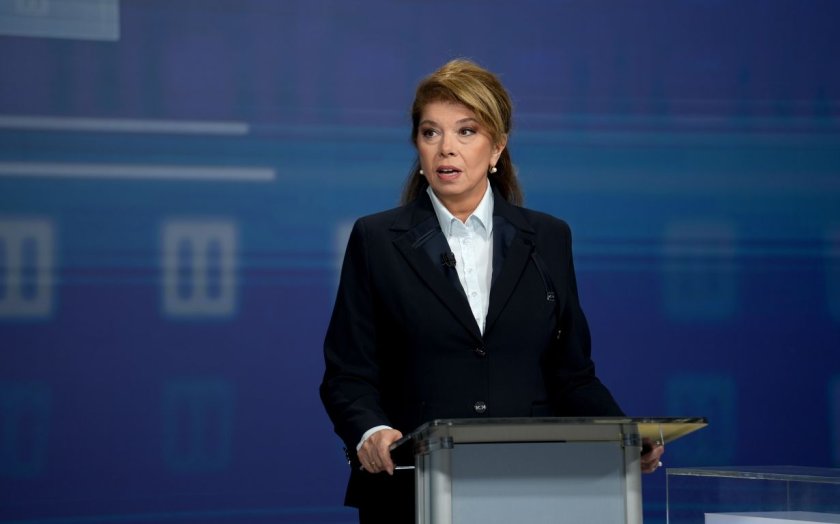
Iliana Iotova, for her part, recalled that following the drone attacks in the Black Sea, Bulgaria had sought and received assistance from its partners, both in the European Union and NATO.
“We engaged in very serious diplomatic efforts. Meetings with the President of Turkey, the President of Romania, and meetings at foreign-minister level. Yesterday, there was a meeting at defence-minister level between the three countries – Romania, Turkey and Bulgaria – because these three countries are precisely the ones that define this route. From now on, there will be a meeting on Black Sea security. I want to take this one step further and propose that there should indeed be a meeting on security and a moratorium on hostilities in the Black Sea involving all six countries. These are Bulgaria, Romania, Turkey, Georgia, Ukraine and Russia.”
Iotova was adamant that the decision to halt both the attacks in the Black Sea and the war is not a temporary truce:
“For many years after 2022, it was believed that peace could be achieved through strength. Thank God, everyone has now become convinced that this is not possible. Indeed, the position of the presidential institution has remained unchanged from the end of February – from 24 February to this day. And that position is that peace can come only through negotiations. Pouring more funds into Ukraine and providing it with ever greater capabilities and increasingly sophisticated weapons leads, in fact, to nothing but further destruction and the deaths of many young people, many innocent people, people on both sides, Orthodox Christians and Slavs. Now we must talk about an agreement for comprehensive peace. This cannot happen without Russia. There is no way these negotiations can begin without it.”
Andrey Gyurov noted that when discussing our defence capabilities, it was important to consider how timely and how effective they were:
“If all we do is buy systems that are expensive and will not arrive for years, and whose effectiveness we do not even know, this does not improve our defensive capabilities. We need to move towards systems in whose development we take part, because warfare changes every day, and the way wars are fought is changing. If we want to be as well protected as possible, we really need to be where these technologies are being developed, working with them and creating, on the one hand, high-paying jobs here in Bulgaria and, on the other, making ourselves better protected by having more advanced and more modern technologies.”
RELATIONS WITH SKOPJE
Our policy toward North Macedonia must continue as it has been, Iliana Iotova stated emphatically.
“Nothing has improved since the agreement was signed, either in terms of hate speech or the persecution of people of Bulgarian origin. The latest case involving Mr Pendikov, and the acquittal of the people who literally beat him up, is clear evidence of this. But we will continue to insist, including with our European partners, that the agreement and European policies be implemented.”
“You see in me someone who will not back down by a single centimetre from what has already been agreed, despite Skopje making very serious attempts to sideline certain protocols,” Iotova added.
“It is a good thing that this discussion has taken place, because when Mr Kiril Petkov was Prime Minister, I can state quite openly to Bulgarian citizens that the Bulgarian position was literally saved at the eleventh hour, as he was going to betray Bulgaria’s position. I would simply remind you that an extremely urgent consultative meeting was then held with the President at the time, Mr Rumen Radev, who prevented this from happening. Otherwise, our interests and the rights of Bulgarians there would not have been protected to this day.”
According to Gyurov, the issue of the French proposal for North Macedonia was particularly interesting because it made it possible to trace how the position of the presidential institution had changed before and after the agreement was adopted:
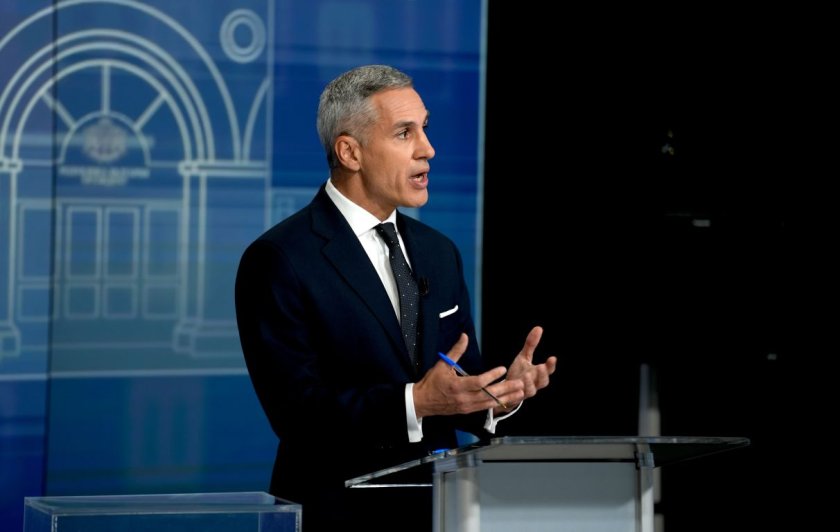
“I was chairman of the parliamentary group and the sponsor of this agreement in the National Assembly. And we remember the fierce criticism directed at the government and on this agreement at the time. What we managed to do was defend the interests of Bulgarian citizens and make the Bulgarian position part of the common European position. We faced a great deal of criticism and accusations that we were betraying Bulgarian interests. Now, with the French agreement in place, all parties, including those in the European Parliament, support it unequivocally, and it is being said that this is a good decision for Bulgaria.”
Andrey Gyurov stressed that the European position was that Bulgarians should be included in the Constitution of the Republic of North Macedonia, thereby ensuring that their rights were protected:
“The facts now are that we have an agreement which everyone supports, including those who attacked it at the time.”
THE POWERS OF THE HEAD OF STATE
Andrey Gyurov would not initiate changes to the Constitution, and said that the so-called “house book” had served its purpose:
“It is important to have the ‘house book’, because in certain situations one person can end up holding all the power in the country, and this leads to distortions. That is not the spirit of the Constitution. There must be checks and balances, and that is precisely why these amendments introduce the balance we are seeking in the Constitution. I do not believe that the presidential institution should have more powers. Rather, the powers it already has should be exercised by the President with greater responsibility and greater initiative, seeking to unite Bulgarian citizens rather than divide them.””
“If you want more powers as President, either you do not know the Constitution well or you are hungry for power. I believe that the President of the country already has sufficient powers,” said Iliana Iotova.
“This disgraceful house book must be abolished. The provisions governing how the caretaker government is formed in future should be examined very carefully, so that the President genuinely has a choice when it comes to assuming this responsibility.”
***
[Based on the 2023–2024 amendments to the Constitution of Bulgaria, the President must select a caretaker Prime Minister from a specific list of senior officials, often referred to as the "house book" or "limited list". This list of potential candidates includes: Speaker of the Parliament; Governor of the Bulgarian National Bank (BNB); Deputy Governors of the BNB; President of the National Audit Office; Deputy Presidents of the National Audit Office; Ombudsman; Deputy Ombudsman.]
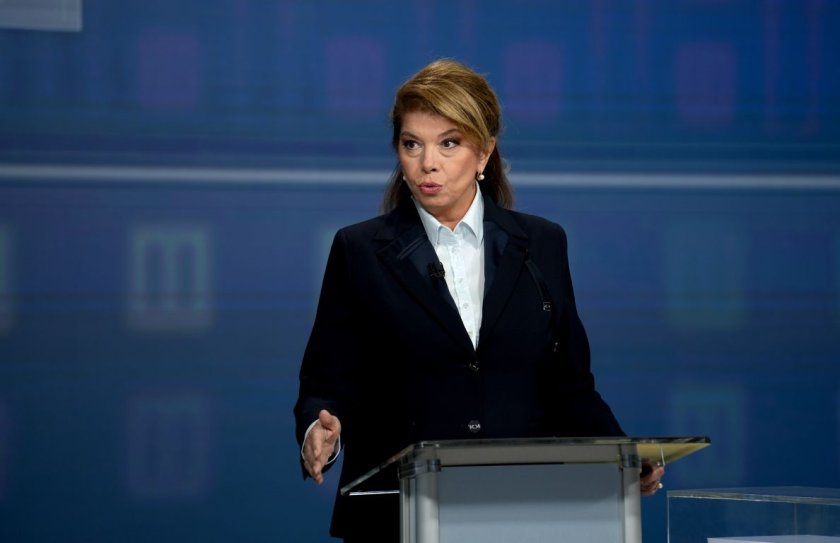
She admitted that when she offered Andrey Gyurov the post of caretaker Prime Minister, no one else was willing to take on the responsibility. Asked whether the administration led by Gyurov had been successful, as he himself had claimed, Iotova added:
“Mr Gyurov, allow me to offer you some friendly advice. Let others be the ones to assess you. Yes, you handled the elections well, and I am an honest and fair person. I said so immediately after the elections had been held. But now comes the big ‘but’. During your time in office, prices rose the most and inflation increased the most, and you proved unable to deal with this.”
PRICES, INFLATION, INCOME
According to Andrey Gyurov, for the first time this year the purchasing power of Bulgarian citizens is declining, and for the first time Bulgaria is no longer among the three EU countries with the lowest debt-to-GDP ratios:
“What an independent President should do is defend the interests of Bulgarian citizens. I will monitor the next budget to see whether additional spending and additional debt are being incurred, and what the money is being used for. The budget was kept secret before the elections, and if it is as good as claimed, we should have been able to see its details. But what we did see was an additional administrative and tax burden of around €2 billion on businesses and households, with no effective measures to make public spending more efficient.”
He said that the presidential institution should bring together trade unions and employers’ organisations to find the right solution and reach a compromise, clearly identifying where the problems lie, what the solutions are and who will foot the bill, so that a presidential veto would not subsequently be necessary.
“Mr Gyurov, I will be the one signing off on the next budget, because even if, in an extremely unlikely turn of events, you were to win the election, you should know that the budget has to be signed by the end of the year,” said Iliana Iotova.
She added that things could not have been entirely in order under the previous government, given that just a month after Rumen Radev came to power, the European Commission announced an excessive deficit procedure against Bulgaria.
“The government now has to try to reduce this deficit while also avoiding cuts to people’s social benefits. And that is exactly what it is doing at the moment. The first thing I will look at in the next budget is the money allocated to the incomes of the poorest and most vulnerable people. It is also the money for investment, and the funding that can support the Bulgarian economy. It is not so much about reducing spending, because I am not a particular advocate of small budget deficits – almost no country in the European Union is currently below the 3% threshold – but rather about ensuring that people have a better life.”
“That is why I believe the initial steps – increasing pensions, raising teachers’ salaries, keeping heating and electricity prices unchanged, preserving people’s incomes, and taking all the necessary measures to support mothers, young people and Bulgarian education – are steps in the right direction. And if we are people of integrity, we should support them.”
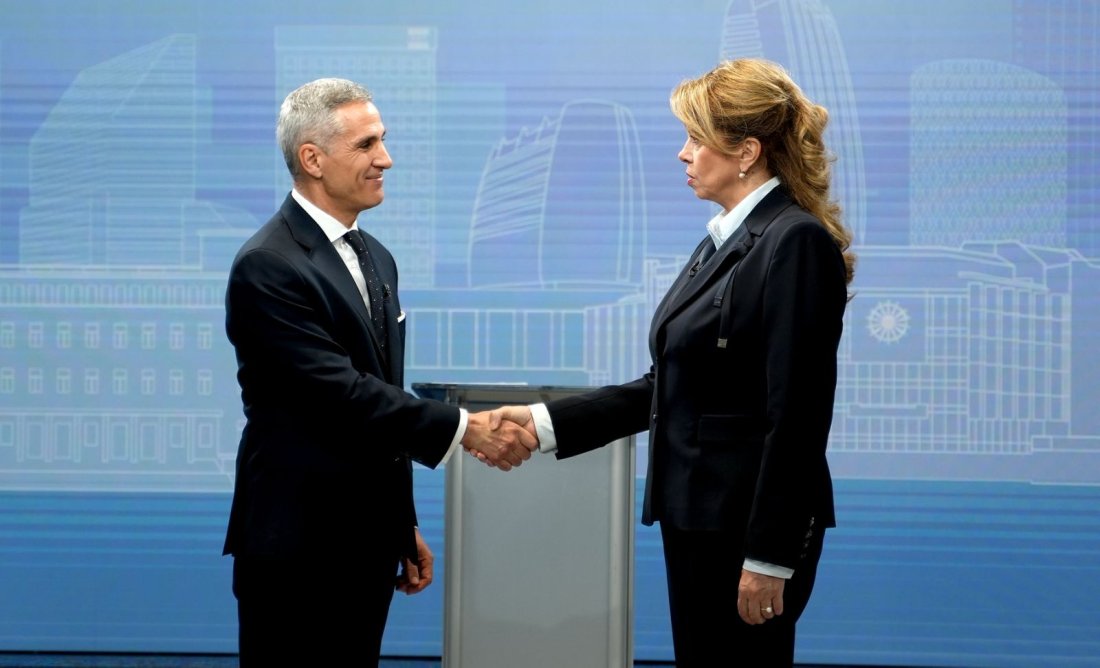
Photos: Desislava Kulelieva, BNT







 Чуй новините
 Подкаст