A Coordination Centre will be established to address issues related to the introduction of the euro from 1 January, outgoing Prime Minister Rosen Zhelyazkov announced at the government’s final meeting of the year held on December 30.
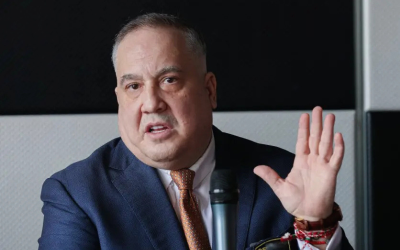
The newly created Coordination Centre for the adoption of the euro will be headed by Vladimir Ivanov, Chairman of the State Commission on Commodity Exchanges and Wholesale Markets, and will start working on 1 January.
Rosen Zhelyazkov, outgoing Prime Minister:
“The task of the Coordination Centre is to coordinate the work of institutions at the central, regional, and municipal levels on all matters related to control activities, communication aspects, and response to problems that citizens and businesses may encounter during the period of dual price labelling and dual circulation of the lev and the euro
The outgoing Prime Minister also reflected on the government’s performance. He noted that the cabinet was formed with difficulty within a complex coalition marked by ideological differences.
“Although this government may appear to be a political one, in 2025 it actually behaved and worked as a programme-based government,” Zhelyazkov said.
He reported record revenue collection exceeding 10 billion leva, lower unemployment, and inflation of around 3.6% over nearly a year in office.
“We have inflation of about 3.6%, and we know the reasons for it. They have nothing to do with the euro. They are linked to increased purchasing power and economic growth, with the economy becoming nearly 4% more transparent,” he added.
Zhelyazkov underlined that the cabinet had fulfilled its commitments on financial stabilisation, the resumption of payments under the Recovery and Resilience Plan, increasing the competitiveness of the Bulgarian economy, and joining the eurozone.
Bulgaria is ending 2025 with a GDP of €113 billion and economic growth of over 3%, placing the country among the top five EU member states by growth, he said.
“Bulgaria has long ceased to be the poorest country in the EU and this should be clearly stated. In terms of purchasing power parity, we are ahead of Greece, Romania, Hungary, Slovakia and Lithuania.”
The country has received nearly 8 billion leva in EU funds this year, with further payments under the Recovery and Resilience Plan expected.
Tomislav Donchev, outgoing Deputy Prime Minister:
“In the first half of 2026, the fourth and fifth payments, worth nearly €2.5 billion, are due.”
At its final meeting for the year, the outgoing cabinet also adopted a strategy enabling individual investors in Bulgaria to trade directly in government securities.
Temenuzhka Petkova, outgoing Finance Minister:“This is a concept that will allow non-professional investors – both individuals and legal entities – to participate directly in the government securities market in Bulgaria.”
The Ministry of Agriculture also reported that farm subsidies have increased by nearly half a billion leva.
On the Eve of the Euro Adoption: Key Dates for Bulgaria’s Switch to the Single Currency
Temporary Outages of Banking Services on the Night of Bulgaria’s Transition to the Euro - Use of Bank Cards at ATMs and POS Will Likely Be Interrupted - see when
Council of Ministers Approves National Programme for Prevention of Rotavirus Gastroenteritis Through Vaccination
Тръмп за атаката срещу Путин: Едно е да обиждаш, друго е да атакуваш къщата му