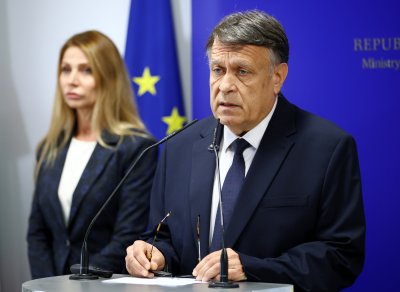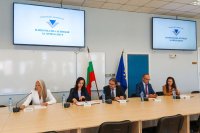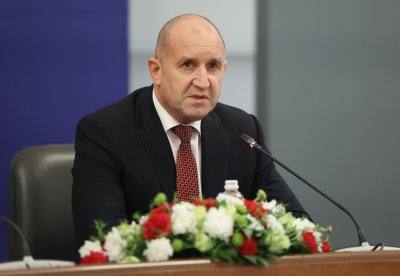

A meeting of the Tripartite Council was held earlier
The government has approved the draft State Budget of the Republic of Bulgaria for 2026, the press office of the Council of Ministers announced on December 8.
In addition to approving the 2026 draft budget, the government also updated the medium-term budgetary forecast for 2026–2028, which serves as the explanatory memorandum accompanying the draft law.
The 2026 budget has been prepared in line with Bulgaria’s first National Medium-Term Fiscal-Structural Plan for 2025–2028, which outlines policies, priorities, reforms, and investment plans over the medium term. These measures are reflected in the national budget documents. Fiscal policy continues to prioritise long-term sustainability of public finances to enhance trust in the country and create a predictable investment and business environment.
In connection with the adoption of the euro on 1 January 2026, all budgetary documents for 2026 have been prepared in euros at the official conversion rate of 1.95583 leva per euro, in accordance with Article 5 of the Law on the Introduction of the Euro in Bulgaria.
The initially drafted 2026 budget bills, approved by the Council of Ministers and submitted to Parliament in November, were withdrawn under Council of Ministers Decision No. 839 of 2 December 2025.
The projections for 2026–2028 reflect trends in the autumn macroeconomic forecast for the national economy, key assumptions, and estimates of the impact of discretionary revenue and expenditure measures.
According to the Ministry of Finance’s autumn macroeconomic forecast, economic growth is expected to reach 2.7% in 2026, with GDP growth projected at 2.5–2.4% in 2027–2028. Average annual inflation for 2026 is expected to remain close to the 2025 level at 3.5%, slowing to 2.9% in 2027 and 2.5% in 2028. These forecasts have been confirmed by the Fiscal Council and are broadly in line with expectations from international institutions such as the European Commission and the OECD.
The budget balance under the consolidated fiscal programme (CFP) is projected to be a deficit of 3.0% of GDP in 2026, 2.8% in 2027, and 2.4% in 2028. Maintaining the deficit within these limits ensures the funding of key expenditure policies alongside corresponding revenue measures.
Based on current assumptions, public debt is expected to reach €37.6 billion (31.3% of GDP) in 2026, €43.5 billion (34.2% of GDP) in 2027, and €49.0 billion (36.6% of GDP) in 2028. The maximum amount of new public debt that may be incurred in 2026 is €10.0 billion, including up to €3.2 billion through the SAFE instrument for strengthening the European defence industry.
The minimum fiscal reserve at 31 December 2026 is set at €2.4 billion.
From 1 January 2026, the minimum social security contribution for self-employed persons will be €620.20. The maximum contribution for all insured persons will be €2,300 in 2026, €2,505 in 2027, and €2,659 in 2028.
Tax policy will aim to ensure macroeconomic and fiscal stability in the medium and long term while providing the necessary resources to implement government expenditure policies. The main objectives of tax policy remain supporting economic growth, improving the business environment, combating tax abuse, and enhancing fiscal sustainability.
Second Version of 2026 State Budget Draft Tripartite Council Discusses the Revised Budget Plan
Central Bank's Governor Dimitar Radev: Bulgaria’s Economy Remains Resilient Despite External and Internal Shocks
Food Prices: Commission for Protection of Competition Reports High Retail Markups in Stores
Томислав Дончев за Бюджет 2026: Социалният диалог е възстановен, постигнат е консенсус по ключови теми
Гроздан Караджов: Покриването на всички разходи са задължение на корабособственика на "Кайрос"