

Bulgarian students have recorded a decline in the latest PISA rankings. Some 58% of 15-year-olds are below the basic proficiency level in reading. For the first time, the results have fallen this low. There has also been a decline in mathematics.
This continues the trend of Bulgarian students performing below the OECD average in one of the world’s most authoritative international assessments of literacy. PISA is conducted every three years by the Organisation for Economic Co-operation and Development (OECD) and assesses 15-year-olds’ ability to apply their knowledge and skills to real-life situations in three key areas – science, reading and mathematics.
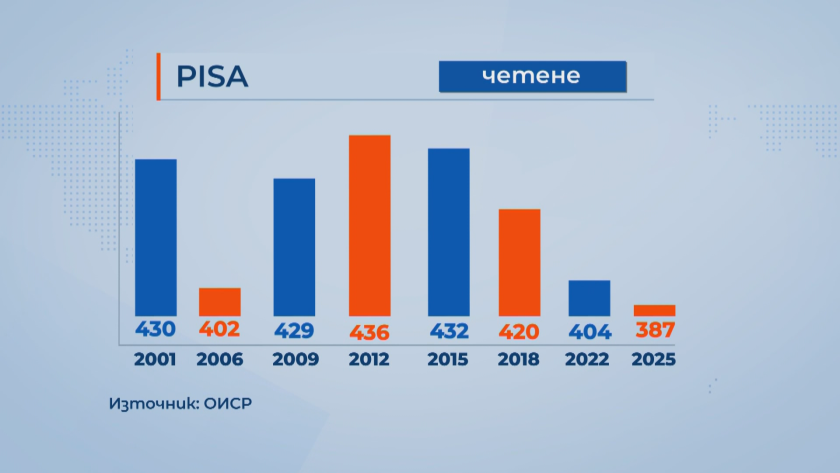
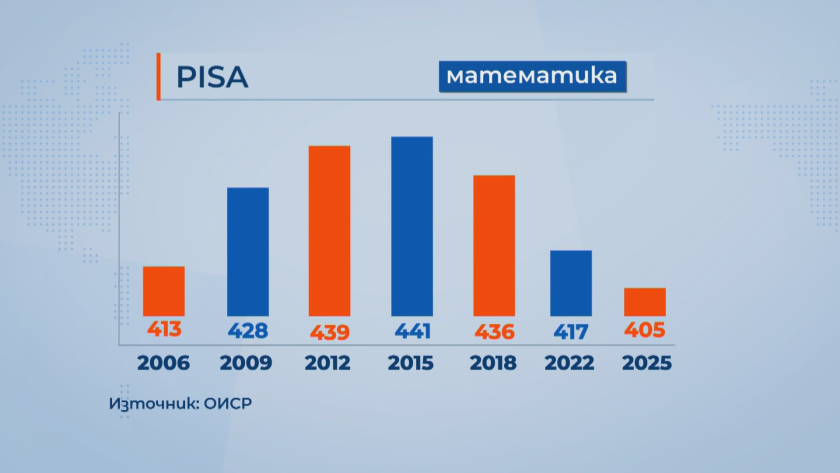
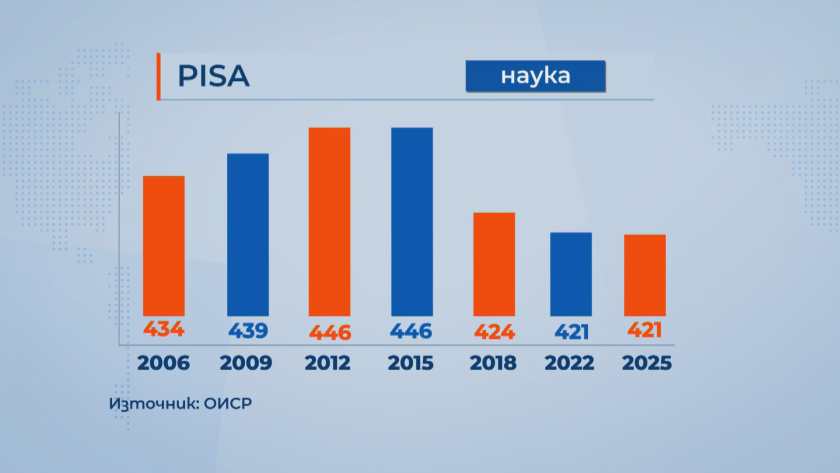
Bulgarian students scored 421 points in science, 387 in reading and 405 in mathematics.

More than 58% of 15-year-olds are below the basic proficiency level in reading. This means they do not have the skills to understand texts, find information and reflect on what they have read. This is the lowest result since Bulgaria began participating in the assessment. Three years ago, the proportion of students with insufficient reading comprehension skills was 53%, while 10 years ago it was 41%.
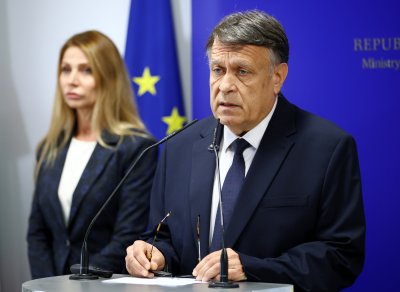
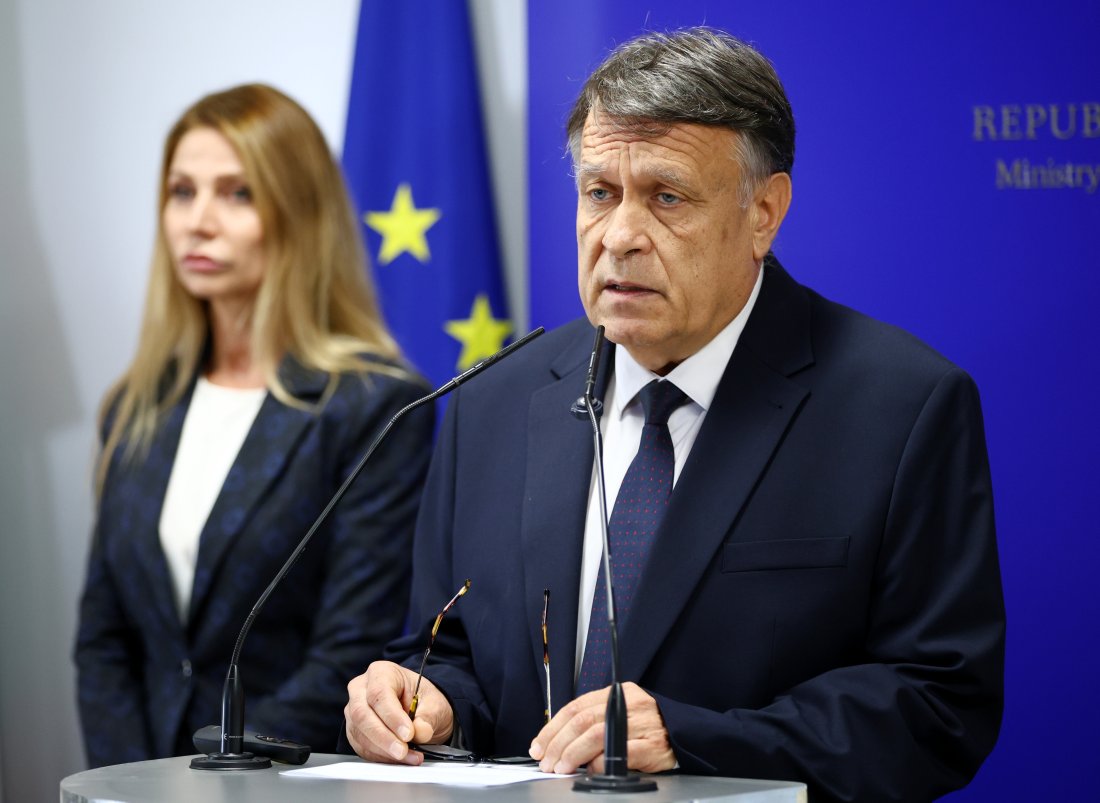
Prof Georgi Valchev, Minister of Education: “These results show that although a great deal has been done over the years to reform the Bulgarian education system, mistakes have also been made.”

Mathematics is another area in which the majority of students are functionally illiterate. For example, over 57% are unable to compare the total distance of two routes or convert a price into another currency. In 2015, the figure was 42%.

There has been no change in the results for science. Students scored the same number of points as three years ago. However, the proportion failing to reach the basic proficiency level has risen to nearly 48%. They are unable to identify the correct explanation for familiar scientific phenomena or determine whether a conclusion is valid.

The Ministry of Education is proposing a package of measures to address the poor results.
“School should not only educate, but also help shape young people, with the support of families, of course. That is why we will try to strengthen these functions without, naturally, allowing – as happened in the distant past – ideology to take over school subjects and the curriculum,” Minister Valchev said.
In addition to focusing on discipline and students’ upbringing, the Ministry of Education is considering changing the funding model so that the money follows the pupil.
***
The Ministry of Education and Science presented the data about Bulgaria’s PISA results, the main conclusions of them, and next steps for improving educational outcomes.
PISA assesses the capabilities of 15-year-old students to apply their knowledge and skills in real-life situations in three key areas – natural sciences, reading and mathematics. The main focus in this particular assessment the was science literacy.
The international study is conducted by the Organisation for Economic Co-operation and Development (OECD), with 760,000 students from 91 countries participating in PISA 2025.
Speaking at a news conference on September 8, Minister of Education,Prof. Georgi Valchev, said that the PISA results remain unsatisfactory. There is a decrease in both the reading and mathematics results and there is a problem in the educational system in Bulgaria in general, he added.
According to him, the results show that educational inequality in Bulgaria continues to deepen. In many Bulgarian schools, especially those with large numbers of students from socially vulnerable groups, there are also problems with basic literacy. Over the next few months, the Ministry will propose a series of measures for discussion to find the most appropriate solutions. They will focus on changing the funding model in the educational system and improving the discipline.
Учредиха Инициативния комитет, който подкрепя Илияна Йотова и Кирил Вълчев за вота на 25 октомври
Кирил Вълчев пред БНТ: С г-жа Йотова имаме общо разбиране как трябва да се стига до съгласие – с диалог
Хаос на британските летища: Стотици полети бяха отменени заради технически проблем във въздушния контрол