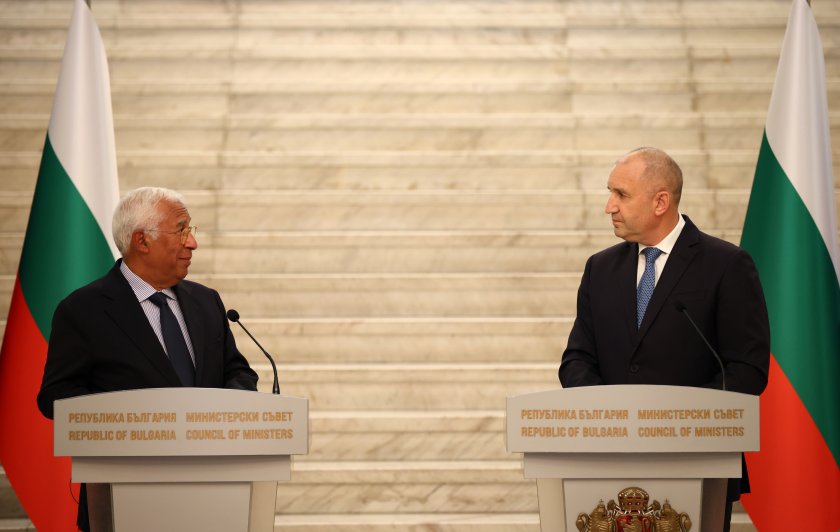
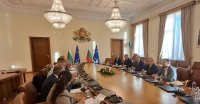
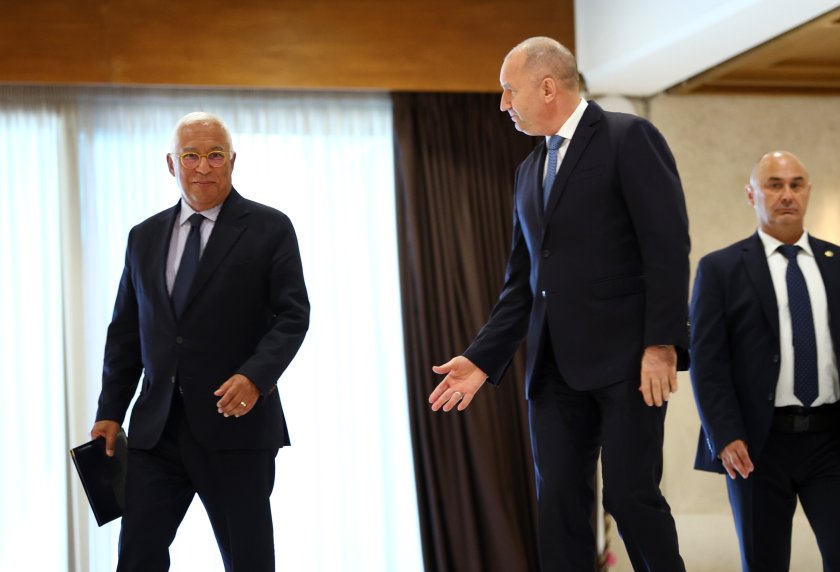
Bulgaria could play a decisive and strategic role in strengthening the European Union’s energy security, European Council President António Costa said after talks with Prime Minister Rumen Radev on September 3. Costa is in Sofia as part of an annual round of visits to EU capitals, seeking agreement on the European Union’s next multiannual budget. In addition to the EU budget and connectivity, Radev and Costa also discussed the bloc’s enlargement.
Defence, security and competitiveness spending should not come at the expense of cohesion funding, Prime Minister Rumen Radev said after meeting European Council President António Costa. Bulgaria’s position on the European Union’s multiannual financial framework therefore remains unchanged.
A tough battle is emerging over the European Union’s multiannual budget. Brussels is proposing that the new seven-year budget should be 60% larger, at a time when everyone is cutting spending and dealing with inflation and high prices. From Sofia, António Costa is also seeking support for the introduction of new European taxes to help finance the budget.
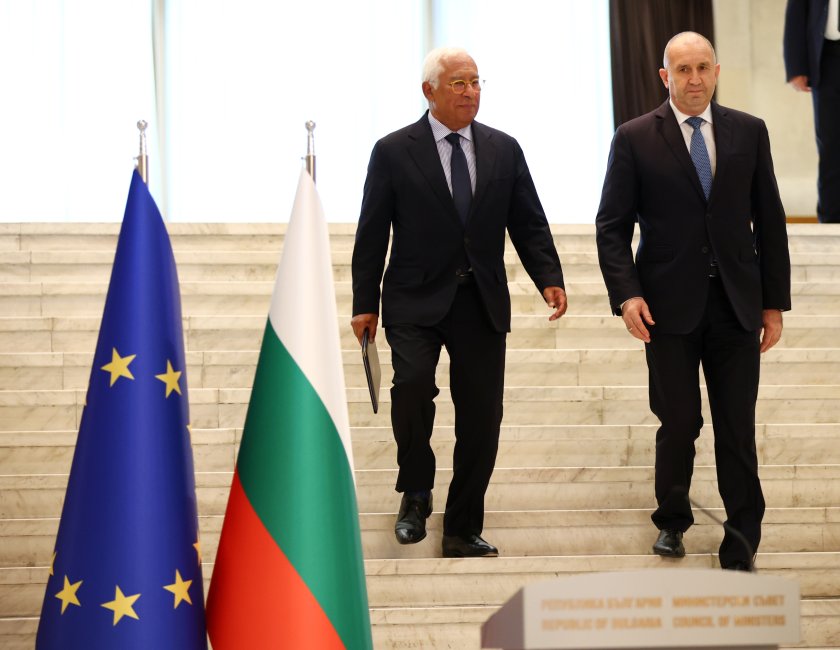
António Costa, President of the European Council: Because most of the European Union's budget comes from national contributions, we must ensure that they stay within reasonable limits. That is why agreeing on new revenue streams, new European own resources, is so crucial. They will play a fundamental role to pave the way for an overall agreement. I know it won't be easy.
A number of countries have already expressed dissatisfaction with the new taxes, which are being considered for tobacco, carbon emissions, or electronic waste. Following the talks, Rumen Radev reiterated Bulgaria’s position that it does not want funding for cohesion and agriculture to be reduced.
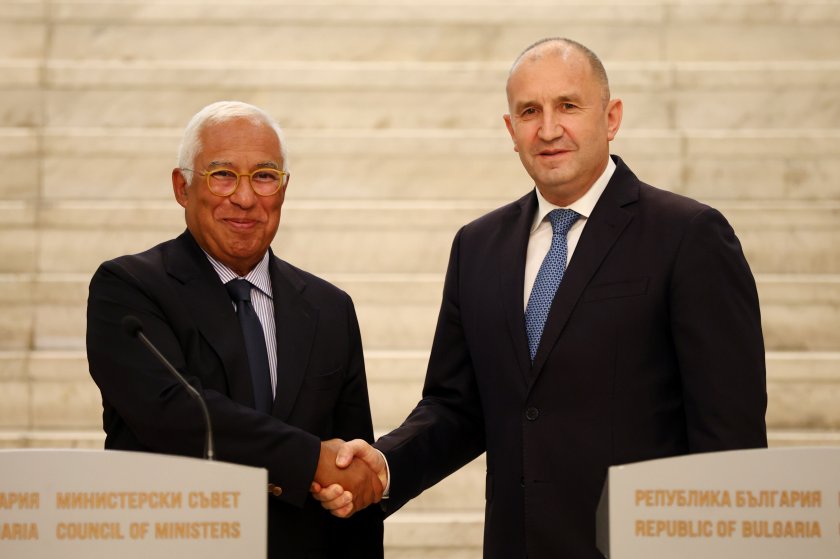
Rumen Radev, Prime Minister: “What I proposed to Mr Costa was that we should consider a new term – industrial cohesion. Rather than talking only about cohesion as it has traditionally been understood, through social programmes and infrastructure, we should have cohesion that gives all member states the opportunity to participate on an equal footing in Europe’s technological and industrial development.”
Energy security is one of the priorities, Costa said, adding that Bulgaria could play a strategically important role in this area.
Rumen Radev, Prime Minister: “Because the Middle Corridor – the so-called Trans-Caspian Corridor – passes through Bulgaria. The future corridors from the Gulf countries, which would help minimise the risks to maritime transport through the Strait of Hormuz, also pass through Bulgaria. And we will work to improve our road and, in particular, rail security with the help of the European Union.”
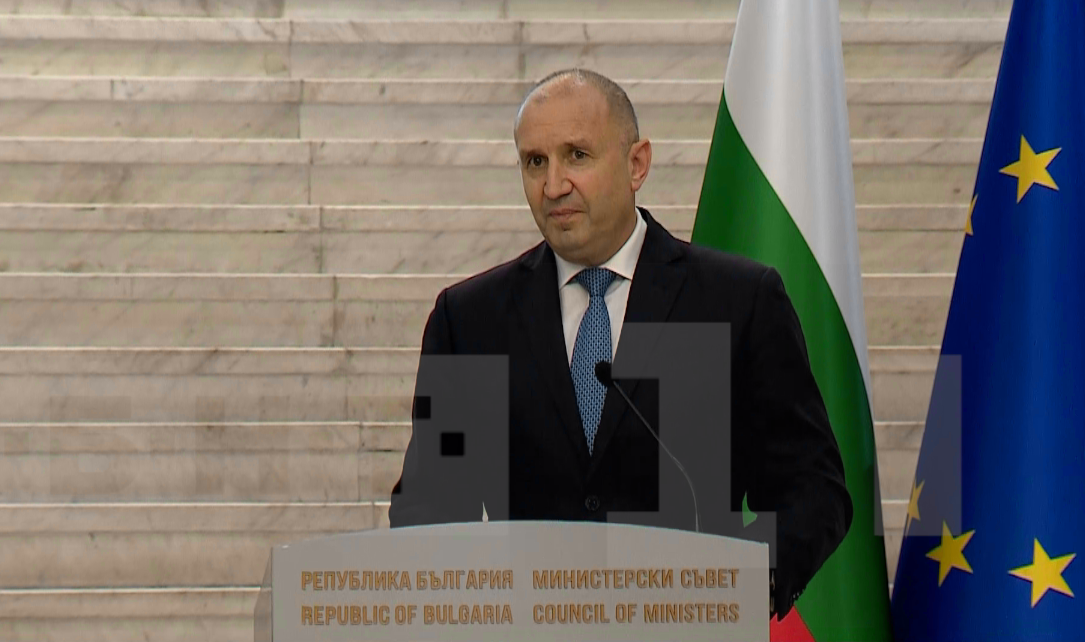
The biggest geopolitical investment is the expansion of the European Union, Koshta stated. As is customary, the President of the European Council and Prime Minister Radev also discussed the Western Balkans.
Rumen Radev, Prime Minister: “We want this enlargement not to be driven by short-term geopolitical developments, but to proceed on the basis of individual merit.”
Antonio Costa, President of the European Council: Candidate countries must carry out the necessary reforms and respect previous commitments; at the same time, it is important that we also play our part. By engaging in a constructive dialogue with them and by recognising progress when it is made.
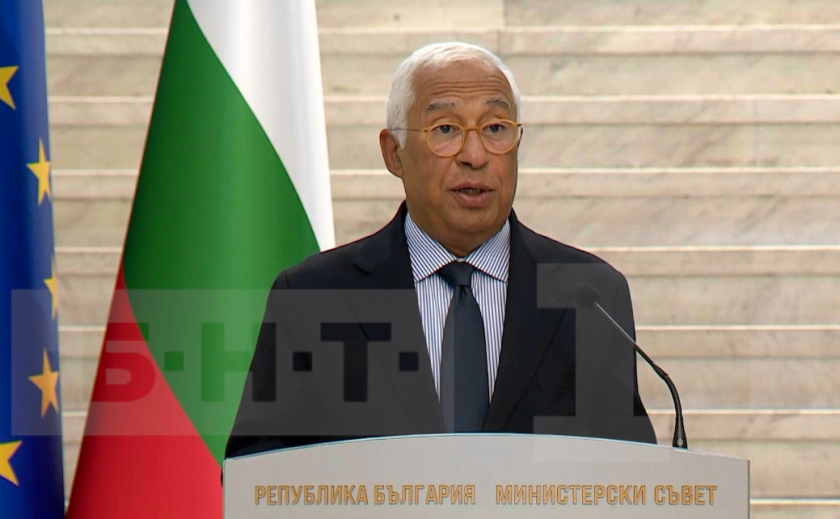
In his remarks in Sofia, António Costa placed particular and extensive emphasis on Russia and the war in Ukraine.
António Costa, President of the European Council: "We need to continue working together on Ukraine. As you know, Russia's hostile behaviour goes beyond Ukraine. We see it on the European Union territory: drones at our borders, cyber-attacks, disruption of critical infrastructure, attempts to undermine our democracies."
The budget, enlargement and connectivity – the battle to find consensus among the leaders of the 27 member states begins with the new political season after 15 September.





 Чуй новините
 Подкаст