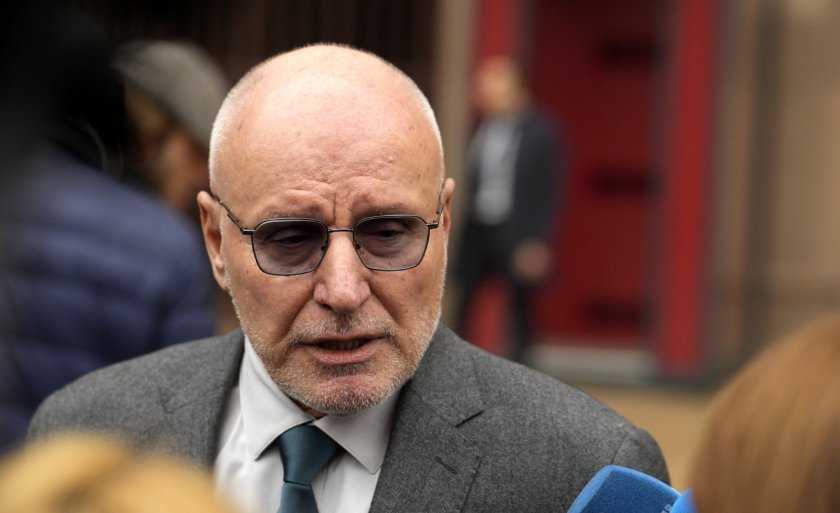
Economic stability in the country increasingly depends on fiscal discipline, the Governor of the Bulgarian National Bank, Dimitar Radev, said during the Money Growth forum on May 13. In his words, it is necessary to build structural competitiveness and institutions to work more efficiently.
Radev noted that inflation in Bulgaria is the result of an interaction between external shocks and domestic structural factors. However, sustainable economic success cannot be imported from outside. He added that external factors set the impulse for change, while internal ones determine its strength and sustainability, meaning that responsibility for domestic policies is even greater.
He also said that in the context of the euro area, the common monetary framework acts as a stabilising anchor, limiting part of external uncertainty.
Radev also outlined the country’s main economic priorities, including fiscal discipline and counter-cyclicality, and said that automatic indexation mechanisms should be discontinued, as they permanently embed inflation into the economy’s cost structure.
He further emphasised the importance of investment in productivity, infrastructure, energy connectivity, digitalisation and human capital, as well as the need for more efficient institutions and stronger competition.
Structural transformation of the economy was also highlighted as one of the key priorities.








 Чуй новините
 Подкаст