
More than 350 million people in 21 countries now use the euro, which has been in circulation for more than 20 years
More than 350 million people in 21 countries already use the euro, which has been in circulation for over 20 years. Bulgaria is now part of the eurozone, so what are the most interesting facts about the euro and the euro area?
The second most important currency in the world
Since 2002, the euro has established itself as the second most important currency in the world. By all major international financial indicators – global payments, foreign exchange reserves, international lending, international debt, and foreign exchange trading volumes – the euro occupies a leading position.

The euro plays a key role in world trade. Approximately 30% of world trade is conducted in euros, which underlines its importance in the world economy. The euro is particularly important in trade with the European Union's main partners, including the United States, Asia, and the United Kingdom, where we are talking about trillions of euros.
The euro plays a key role in global trade. Approximately 30% of world trade is conducted in euros, which highlights its importance for the global economy. It is especially significant in trade with the European Union’s main partners, including the United States, Asia, and the United Kingdom, where transactions amount to trillions of euros.
The euro helps in the fight against climate change
Both the EU and the euro are global leaders in the issuance of green bonds. These are used to finance projects that have a positive impact on the environment or climate. Around half of all green bonds worldwide are issued in euros, and the EU itself accounts for roughly half of this volume.

The widespread use of the euro in international trade not only facilitates smoother transactions but also strengthens the euro's position as a stable and reliable currency on the world market. This widespread use underlines the impact of the euro on improving economic relations and promoting trade efficiency worldwide.
What do we need to know about bank notes and coins?
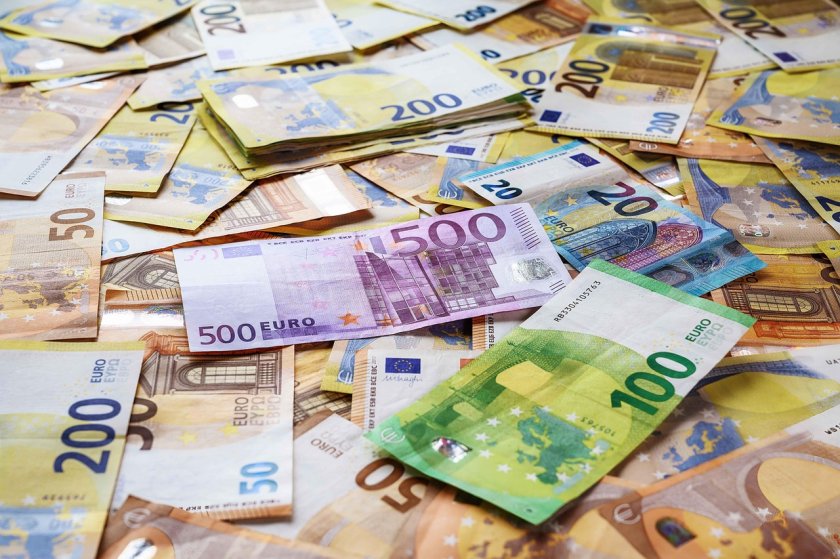
More than 30 billion euro banknotes and 154 billion euro coins are currently in circulation.
By the end of 2025, over 30 billion euro banknotes were in circulation, with a total value exceeding €1.6 trillion, along with approximately 154 billion euro coins worth around €35 billion. These figures continue to grow as new countries join the eurozone, such as Bulgaria in 2026.
Euro banknotes from the second “Europa” series range from €5 to €200, while coins range from 1 cent to 2 euros. The €500 banknote from the first series is no longer being issued. It remains legal tender, but in practice it is rarely used and is often not accepted in shops. Therefore, if you happen to receive one, it is advisable to exchange it at a bank for smaller denominations.

In January 2019, central banks in the euro area stopped issuing the purple €500 banknote due to concerns that it facilitated criminal activity. Its association with money laundering and the financing of terrorism earned it the nickname “Bin Laden” in some circles.
The €500 banknote made it much easier for criminals to transport large sums of cash. For example, €1 million in €500 notes weighs only 2.2 kilograms, compared to over 20 kilograms if €50 notes were used.
Which Is the Most Widely Used Banknote?
The €50 banknote is the most commonly used, with more than 14 billion in circulation. It is followed by the €20 and €100 denominations.

€2 coins commemorate 388 historical events, anniversaries, personalities, and landmarks through special commemorative issues. Each country is allowed to issue up to two commemorative €2 coins per year. Greece was the first to do so, marking the 2004 Olympic Games in Athens.
Euro coins are produced in silver, gold, and copper tones and feature a common design on one side and national symbols on the other. Interestingly, since they are minted in different countries, they vary slightly in size.

Euro Coins Outside the EU
Andorra, Monaco, San Marino, and the Vatican use the euro and issue their own euro coins.
In addition, the euro is the official currency of Kosovo, Montenegro, and the sovereign base areas of Akrotiri and Dhekelia. These bases are British Overseas Territories on the island of Cyprus, making them the only places under British sovereignty that use the euro.

Estonia
Each euro coin has a common side and a national side. While the common side shows the denomination and a map of Europe, the national side varies depending on the issuing country.
All common sides depict a map of Europe, but Estonia is the only EU member state whose coins also show the outline map of its own country, albeit on the national side.

Euro coins are issued in denominations of:
€2, €1, 50 cents, 20 cents, 10 cents, 5 cents, 2 cents, and 1 cent.
However, to avoid using the two smallest coins, some cash transactions in the Netherlands, Ireland, and Finland are currently rounded to the nearest five cents.
In Just 12 Days, Tax Authorities Detected 28 Violations Related to Price Increase
Food Prices and the Euro - Prices Rise for Some Vegetables in Bulgaria, Particularly Off-Season Produce
Росен Желязков върна на президента мандата за съставяне на правителство неизпълнен