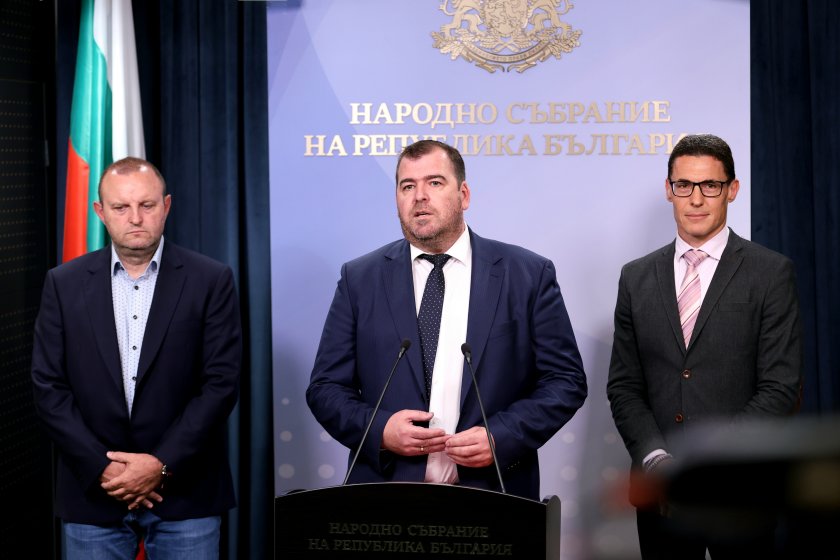
The Progressive Bulgaria parliamentary group is submitting a package of concrete measures aimed at tackling high prices in the country. The proposals include two draft laws linked to the Commission for Protection of Competition and the Consumer Protection Act.
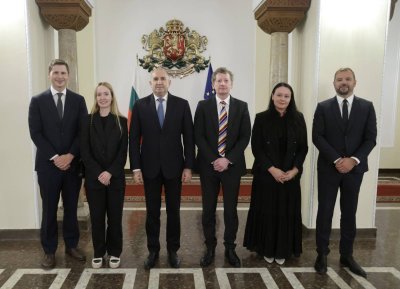
President Iotova: It Is Not Normal for Basic Food Prices to Be “Astronomical”
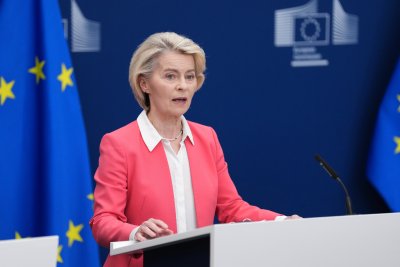
Representatives of the governing majority said they would draw on the experience of Western countries, where similar measures to combat high prices have already produced results. The draft laws are expected to be voted on in the Budget Committee as early as tomorrow.
“The fight against speculation — against the fishing in murky waters — is our main priority. Tomorrow morning, at first reading in the Budget Committee, they will be discussed. The fight against speculation and an end to feasting during a plague,” said MP Konstantin Prodanov of Progressive Bulgaria.
“Our parliamentary group has submitted several draft laws — some related to prices and others concerning the judiciary. There are several factors driving prices up. One is justification — for example, high fuel prices, wars, and disruptions in logistics channels. But there is also a component of price increases linked to speculation, even though there is no formal legal definition of speculation. Bulgarian society believes that the prices seen in retail chains, pharmacies, and various wholesale and retail market segments are excessively high and cannot be justified. These two laws aim to minimise risk and eliminate unfair commercial practices that lead to unjustified mark-ups,” said Yavor Gechev of Progressive Bulgaria.
He added that the Competition Protection Act and the Consumer Protection Act should be aligned.
“First, we are expanding the list of unfair trading practices from the current 13 points to 33. These practices have been identified both by the Commission for Protection of Competition and by society. We are extending the list to increase transparency around unfair practices. The second element is the so-called traceability register. Every product across the entire supply chain will be documented, without placing excessive burden on traders. The third element is borrowed from German legislation — joint dominant position. When several market players, even if not linked by ownership or explicit agreements, hold such market power that they can distort market relations and create pricing anomalies, the cencept of excessively high prices is introduced.”
Prodanov stressed: “We do not want to twist the arms of retail chains; we want to ensure they do not twist the arms of producers and consumers.” He also announced that the group is proposing a one-year extension of the Euro Law.
He said pricing has two components — between producer or supplier and retail chain — which fall under the remit of the Commission for Protection of Competition. The aim, he said, is to combat unfair practices through the proposed changes.
The proposals include extending the Euro Law, which is due to expire in early August, by one year. They also include a requirement for major retail chains to provide daily price data on goods, as well as an extended obligation to justify price increases — a requirement already included in the current legislation.
"The effects of adopting the euro have not yet been fully realised, and the potential obstacles and problems related to price adjustments continue to this day," he said.
“Progressive Bulgaria” is also proposing a doubling of fines that may be imposed by the Commission for Consumer Protection.
“The Competition Commission has these powers, and we hope this will act as a straitjacket. The aim is to have a disciplinary effect. We are introducing the concept of a fair price, calculated using a methodology from the Ministry of Economy — this is not a fixed price cap or margin cap. It shows what the price of a product should be in a well-functioning market economy. The goal is to discipline retail chains. These are entirely market-based measures. Experience from other European countries shows this is the right approach. We expect it to lead to control over prices in the basic consumer basket,” Prodanov added.







 Чуй новините
 Подкаст