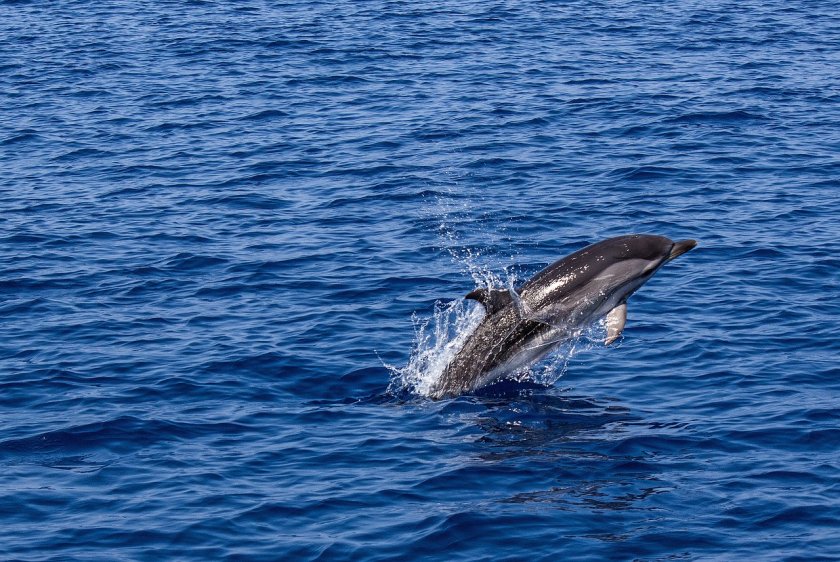
The population of dolphins in the Black Sea has still not recovered from their mass slaughter in the mid-20th century. This is indicated by reports from scientists at the Institute of Oceanology in Varna. At present, there are around 73,000 dolphins in Bulgaria’s Black Sea waters.
The large-scale hunting of dolphins began in the late 1940s. In Bulgaria, a specialised fleet was established, whose vessels would venture up to 200 kilometres offshore to hunt the mammals. Aircraft also assisted by providing information on the movements of the pods.
Donka Nikolova, State Archives – Varna: “A single dolphin-hunting group comprised around seven to eight people. There was the captain of the vessel, as well as marksmen who used hunting and military rifles to shoot the dolphins. There were also crew members with hooks to retrieve the animals, and divers who would pursue wounded individuals.”
Assoc. Prof. Marina Panayotova, Institute of Oceanology: “At that time, purse-seine fishing was also introduced—these are enormous nets used to encircle dolphin pods. They were then shot with rifles.”
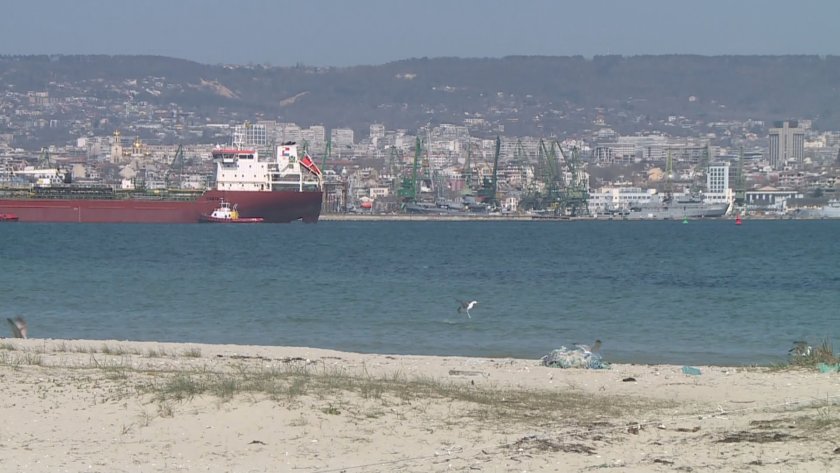
Photos by BNT
Kostadin Paunov has been a fisherman for decades. The history of the mass hunting of dolphins is well known to him.
Kostadin Paunov, fisherman: “At the moment the dolphin is shot, it leaps and remains afloat until it is retrieved. If it is not retrieved, the other dolphins take it and sink it to the seabed.”
Dolphins were hunted for their valuable fat, which has a high Vitamin D content. Their meat was also considered a delicacy in restaurants along the Black Sea coast. In 1959 alone, 59,000 dolphins were killed in Bulgaria. Seven years later, their capture was banned in the country, and they were designated a protected species.
Assoc. Prof. Marina Panayotova, Institute of Oceanology: “Their populations recover very slowly. They have a low reproductive rate. In bottlenose dolphins, females reach sexual maturity between five and ten years of age, males at around ten; gestation lasts 10 to 12 months, and they care for their young for three years, teaching them social behaviour and hunting skills.”
Despite the ban on hunting, the decline in dolphin populations continues due to marine pollution and fishing nets.
Kostadin Paunov, fisherman: “I have had cases with nets when we are catching bonito; they float, and dolphin calves get caught on top. The mother circles nearby. When they are alive, we always release them—it is sacrilege to kill such an animal. But there are cases when they are drowned in the nets. There is nothing we can do then.”
At present, three species of dolphin inhabit Bulgaria’s Black Sea waters: the bottlenose dolphin, the harbour porpoise, and the common dolphin.








 Чуй новините
 Подкаст