"Let us join forces to achieve yet another victory for Bulgaria," the Director General of BNT said
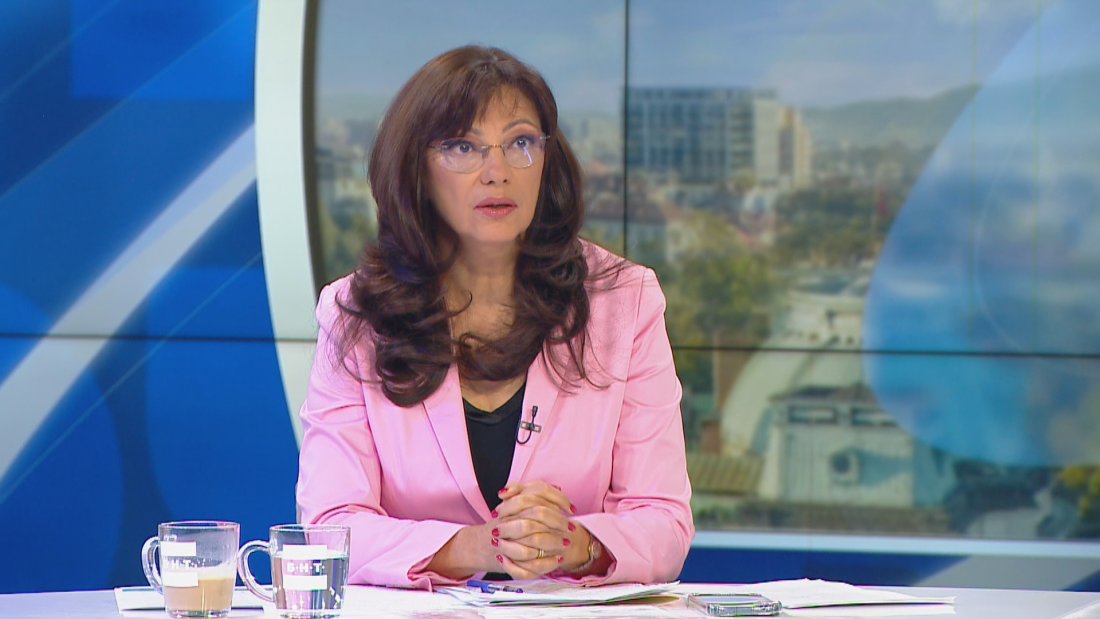
Burgas will host Eurovision 2027, with preparations for the major international event already under way. BNT Director General Milena Milotinova said this in an interview with 'The Day Begins' on August 14. According to her, Burgas received the highest overall assessment because of its comprehensive proposal, infrastructure, transport links, hotel capacity and the commitment of the municipal authorities.
Milena Milotinova, Director General of BNT: “Burgas presented the strongest overall bid. This covers the venue for the event itself, Arena Burgas, very strong commitment from the municipality, transport links, good infrastructure and good hotel accommodation. It also included a vision for creating an overall experience that would involve the entire city, rather than just Burgas and the surrounding region, and make it a memorable event.”
The host city was selected following a comprehensive assessment based on a range of criteria grouped into five main areas. The bids were reviewed by an international expert working group.
“The assessment was comprehensive and included many criteria across five areas. The documentation was extensive, running to dozens of pages, and was reviewed by the expert working group, which included BNT staff who have been involved in preparations for Eurovision over the past 10 to 15 years, as well as EBU and international experts who have been working on Eurovision for 15 years. It was an international assessment group with an exceptionally high level of expertise.”
Milotinova stressed that the organisation of the contest is being carried out in close coordination with the European Broadcasting Union (EBU), which sets the standards and guidelines for hosting the event.
“Throughout the entire organisation process, we are working step by step with the EBU, hand in hand with the EBU. The criteria for selecting the host city, as well as the guides and guidelines, all come from the EBU. We are in constant contact through online meetings and sessions with their experts. We are doing everything together in close coordination because this is an event of enormous international scale.”
She said Bulgaria had already demonstrated that it had the capacity to successfully manage its participation in the contest, while BNT was capable of assembling an international team around the Bulgarian entrant.
“This is where we should point out that Bulgaria, as Eurovision Director Martin Green has also said, won in Vienna by the biggest margin in the 70-year history of the Eurovision Song Contest. Not only in the public vote, but also in the jury vote. What is more, our performer also won the award for the best performance, the best staging, which shows that BNT has the capacity to put together the international team that stood behind our performer DARA and took us to victory.”
She also recalled the criticism that accompanied Bulgaria’s participation at the beginning, before the team gradually built on and improved its performance.
Milena Milotinova, BNT Director General: “You will recall that the initial forecasts were not so favourable. There was a great deal of criticism, including over the choice of performer. But then, step by step, we built on it together and ultimately reached the final with this triumph. And I can say that Bulgaria’s return to Eurovision really was triumphant, because BNT had not participated in the contest for the previous three years. It returned – and returned triumphantly. We hope we can show the same level of success in hosting the contest, because BNT has the capacity to do so, Burgas is an excellent host city, and the EBU has been with us throughout, from winning Eurovision in Vienna in May until now. On a daily and weekly basis, step by step, we are working together with them.”
On-site preparations are already under way. Work began today on the sites around Arena Burgas, where supporting infrastructure will be built.
"Burgas is starting work on the hosting arrangements today. We had a working meeting yesterday with the Mayor of Burgas and members of his team who had joined him here in Sofia to sign the agreement. Today, work is beginning to level the sites around Arena Burgas, preparing them for the supporting infrastructure and structures that will be built around the venue.”
A major preparation effort lies ahead, requiring sustained work from both BNT and Burgas Municipality.
“There is a great deal of work ahead. BNT has a motivated team, and Burgas Municipality also has a motivated team. This team was identified by name and appointed at the tender documentation stage, so we are getting down to work and will keep the public informed about the steps ahead.”
Milotinova stressed that hosting the contest would not be limited to Burgas. BNT intends to involve the other municipalities that took part in the host-city selection process through a programme of additional events.
Milena Milotinova, BNT Director General: “The fact that Burgas has won the right to host the contest does not mean that the event will take place only in one city. The other three municipalities that applied actually submitted very good bids. We have expressed our willingness to invite the mayors and discuss opportunities for additional events to be held in their cities as part of the accompanying programme for Eurovision 2027. They are very enthusiastic about hosting such events in their cities, and I think we will do it in the best possible way. Our ambition is truly to create an event that will be national in scope, as part of this major global international forum.”
The concept also envisages involving communities around Burgas Bay. Milotinova also commented on reports of increased hotel prices following the decision to select Burgas as host.
“I would like to believe, and I think this is the case, that these are isolated instances of price increases, because the information provided to us by Burgas Municipality is that 150,000 rooms have already been contracted with selected hotels, which you can find on the GoToBurgas website. They range from one- to five-star accommodation and are available at perfectly reasonable prices.”
She also explained how the host-city selection process was organised, stressing that the criteria had been presented to all candidates in advance.
Milena Milotinova, BNT Director General: "There are many criteria, and they were presented at the outset, more than a month ago, when we announced the bidding process and invited the mayors and their teams to BNT. We also invited EBU experts and explained all the criteria in detail over the course of two hours. We also gave them the opportunity to ask questions, both of BNT and EBU, to clarify any points where there were ambiguities, and they did so.”
The criteria were grouped into five main areas – infrastructure; commitment and governance; security; transport and accommodation; and branding, experience, communication and sustainability.
Milena Milotinova, BNT Director General: The criteria were grouped into five areas. The first is infrastructure, venues and technical provision. The second covers the host city’s commitment, management and capacity to deliver. The third is the city’s safety, security and sustainability. The fourth covers operations, transport and accommodation. And the fifth, as I mentioned at the beginning of our conversation, is branding and the experience the city will offer to all the fans and tourists who come for Eurovision — communication and sustainability.”
According to Milotinova, each of the five areas contained numerous additional requirements, which were reviewed by the international working group.
“Under these five areas, there are many sub-requirements, which were taken into account and incorporated into the proposals submitted by the different cities and examined in detail by the international working group responsible for assessing the cities.”
The process continued after the initial review of the documents. The candidates were asked to provide additional information, with all of them having equal access to the questions and answers.
“One city could hear the questions and answers given to the other city, and vice versa, so everything was carried out according to the procedure required by the EBU and as agreed with them.”
The final stage involved presenting the decision to the Eurovision Reference Group.
“The final stage of this process was presenting the decision of the working assessment group to the Eurovision Reference Group. The Reference Group is essentially a board to which we presented the final decision of the international working group assessing the cities, along with all the information that had led to that decision.”
The Reference Group includes representatives of the EBU and cities that have hosted the contest in recent years.
“So, in other words, we went through multiple levels of expertise before reaching the final decision.”
Following the announcement that Burgas would host the contest, critical reactions also appeared on social media. Milotinova said that, in her view, Bulgaria should unite around the upcoming event.
Milena Milotinova, BNT Director General: “I wonder why we cannot celebrate such a major event that Bulgaria is about to host. This is a unique opportunity for Bulgaria to show that it can organise large-scale international events to the highest standard. And I think that is exactly how we should do it.”
She added:
“I think that just as Eurovision’s slogan is ‘United by Music’, our slogan should be ‘United for Eurovision 2027’.”
The BNT Director General also praised the reactions of the other host-city candidates:
“I saw the reactions of the other three mayors to Burgas winning, and I was very impressed. I congratulate them on their very positive response and their willingness to help with the hosting and take part in the accompanying events. We will do this in cooperation with them.”
Milotinova drew a parallel between the reactions following the selection of Burgas and the criticism that accompanied Bulgaria’s participation in the contest.
“I have seen many of the things that have been said on social media. And once again, it took me back to the time when BNT, together with the artist it selected through the national selection process, faced a great deal of hostility. But BNT did not back down or give up then, and neither did our performer.”
She recalled that it was precisely in this way—starting from a low point and with no chance of winning according to the predictions—that Bulgaria actually secured its victory.
In her view, Bulgaria has the necessary potential to successfully organise the contest.
Milena Milotinova, BNT Director General: “Because we are a country with potential, a country with a great deal of talent. Many people did not believe at the time that Bulgaria could win Eurovision, but Bulgaria did it and proved that it could. Let us prove it again now. Because we have an excellent opportunity to deliver a successful hosting. We can do it.”
The interview also touched on whether the contest must necessarily be hosted in the capital of the winning country. Milotinova pointed to examples from recent years which, she said, showed that this was neither the norm nor a requirement.
“In the 10 years before Vienna alone, the contest was held more often in cities other than capitals – in Basel, Liverpool, Rotterdam twice, in 2020–2021, Turin and Malmö. As you can see, none of these cities are capitals. They are smaller cities, but the contest was extremely successful and received very positive assessments from the EBU.”
She cited Basel as an example of the atmosphere the contest can create in a smaller city:
“Incidentally, the atmosphere created in these smaller cities, as happened in Basel, is also an example cited by Eurovision fans: for two weeks during the contest, Basel was not simply Basel – it was the city of Eurovision. The city came together around the event, and the spirit of Eurovision was felt very strongly by all the fans.”
According to her, the effect was also tangible for people who were unable to buy tickets for the contest:
Milena Milotinova, BNT Director General: “Including those who were unable to buy tickets, could not watch the concerts and accompanying events live, but were simply visitors to the city. And the city gained enormously from hosting the event.”
Asked whether politics had influenced the choice of Burgas as host city, the BNT Director-General was unequivocal:
“Politics must be kept away from Eurovision. The choice of Burgas was entirely based on expert assessment.”
Milotinova said that discussions on Bulgaria’s representative at Eurovision 2027 would begin in the coming months. She also addressed the issue of ticket sales.
Milena Milotinova, BNT Director General: “We are receiving many questions from fans who want to buy tickets for Eurovision. Let’s also make it clear that tickets will go on sale in the coming months, because the time is not yet right. There is a centralised ticketing system operated by the EBU. As soon as it goes live, information will be available on the Eurovision2027.bg and GoToBurgas websites. There will also be information on the Eurovision website about when, how and through what process tickets can be purchased. I just want to tell fans that they will need to register in advance in order to buy tickets. They can do this in the way specified on the dedicated website. It is still too early; based on experience from previous host cities, tickets are usually put on sale towards the end of the year. As soon as everything is ready, we will announce it.”
According to Milotinova, Burgas has considerable experience in welcoming tourists and organising major events.
Milena Milotinova, BNT Director General: “In fact, Burgas is the city that welcomes the largest number of tourists in Bulgaria each year. So they have enormous experience in welcoming tourists, in logistics, in getting tourists there and transporting them, as well as in accommodation and catering, and in providing entertainment in the form of concerts and other cultural events. Burgas has an impressive cultural programme. So the municipality has the experience and is sufficiently prepared to handle this new influx of tourists that is expected next year.”
She also outlined plans to include additional airports and transport links.
“At the same time, Burgas has shown an ambition to include not only its own airport, but three other airports as well, namely Sofia Airport, from where the national carrier has arranged much more frequent flights from Sofia to Burgas during the Eurovision period than on other days. There is also Varna Airport and Istanbul Airport, which is the largest transport hub in Europe. All this demonstrates Burgas’s ambition to handle the logistical side of the project very well, including the transportation of tourists, fans, delegations and official guests.”
In conclusion, Milotinova called for a joint effort around hosting the event.
“We are confident that we will put on a very, very good Eurovision and to all those who are inclined to criticise, I would say: allow us, through our collective efforts, to achieve another victory for Bulgaria, bringing together the country’s full potential and all the talent it possesses. We will do it with the international team we will bring in to deliver Eurovision 2027, and with the help of the other three cities, where we will stage some extremely interesting accompanying events. I am confident, because I am convinced that they have creative teams. And let’s leave all the comments until afterwards. Let’s prepare the events first and then comment. The best is yet to come, probably — and so is the hardest part of organising it.”


 Гледайте първия епизод от новия, шести сезон на култовия сериал "Под прикритие" по БНТ










 Чуй новините
 Подкаст