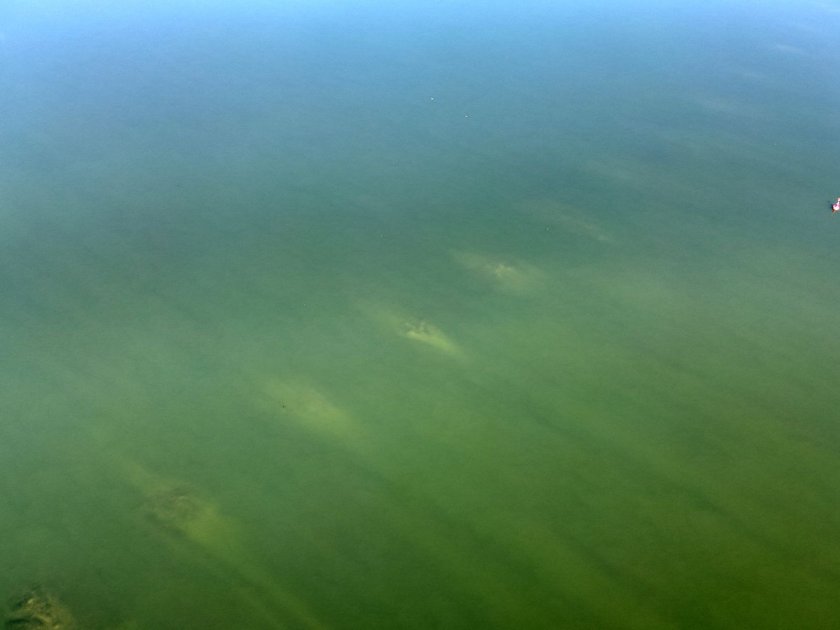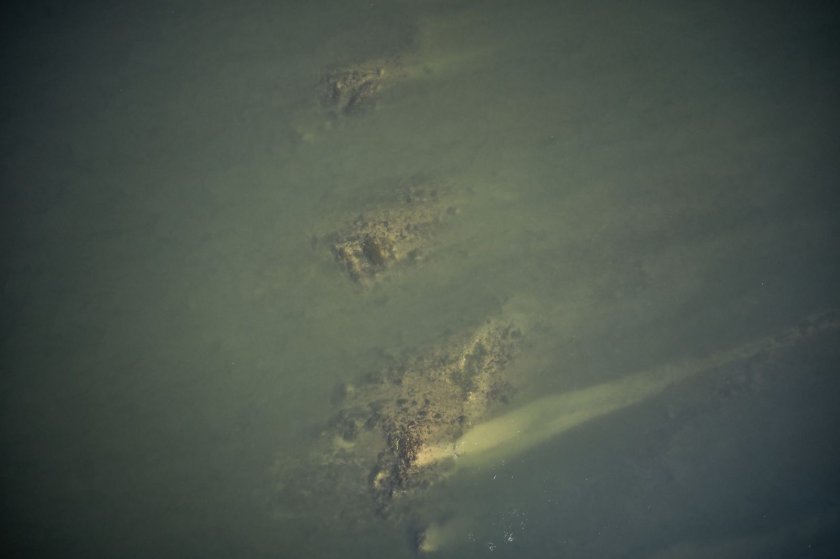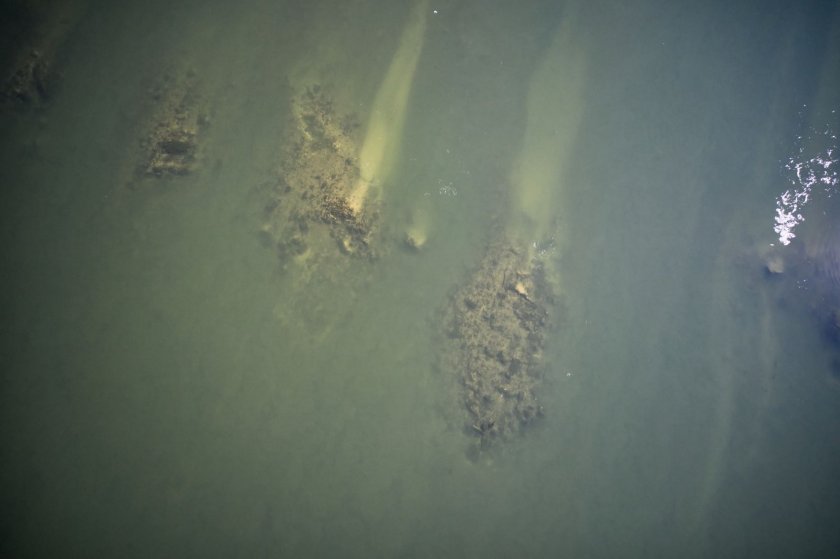


Researchers from the Regional Museum of History in Pleven are documenting the foundations of Constantine's Bridge near the ancient city of Ulpia Oescus, close to the present-day village of Gigen.
The unusually low water levels of the River Danube have created conditions for investigations that would normally be far more difficult—or impossible—to carry out. The work includes more precise documentation of the visible bridge foundations, tracing the bridge's route, expanding information gathered during previous research, identifying previously unknown structural elements, and clarifying details of the bridge's construction.

The research is also expected to contribute to a better understanding of how the Danube's riverbed has changed over the past 1,700 years.
Constantine's Bridge, the longest bridge ever built across the Danube, was constructed at the beginning of the 4th century AD and was inaugurated by Emperor Constantine I on 5 July 328 AD. It is regarded as one of the most impressive engineering achievements of the Roman Empire.
Built on the orders of Emperor Constantine the Great, the bridge linked the ancient city of Ulpia Oescus (today's village of Gigen in Bulgaria) with Sucidava (present-day Celei, a district of Corabia in Romania). Its total length exceeded 2 kilometres.

Photos: Martin Milev, Pavel Popov
The bridge is believed to have been destroyed around AD 367, meaning it stood for only about four decades. Some theories suggest it was destroyed during a barbarian invasion in AD 355, while others argue that its wooden superstructure was deliberately burned by the Romans to prevent it from being used by invading tribes.
Its construction stands as a testament to the remarkable capabilities of Roman engineering and to Constantine the Great's determination to strengthen the empire's northern frontier.
For Bulgaria, the bridge is of particular historical importance because it began at Ulpia Oescus, one of the most significant Roman cities along the Lower Danube.
The Fentanyl Affair: Undercover Agents Traced the Operation to the Lab in “Fakulteta”
Manipulated Water Meters and ‘Protection Fee’: New Scandal Involving Former Head of Burgas Water Utility
Bulgaria's Ministry of Foreign Affairs: We Insist That Iva Mihaylova Be Granted Access to Timely and Adequate Medical Care
Фентаниловата афера: Агенти под прикритие стигнаха до лабораторията във „Факултета“
Рекорден износ на ток: Парковете с батерии правят България лидер на пазара
И след медицинско заключение: Пак отказаха на Ива Михайлова да се лекува в България