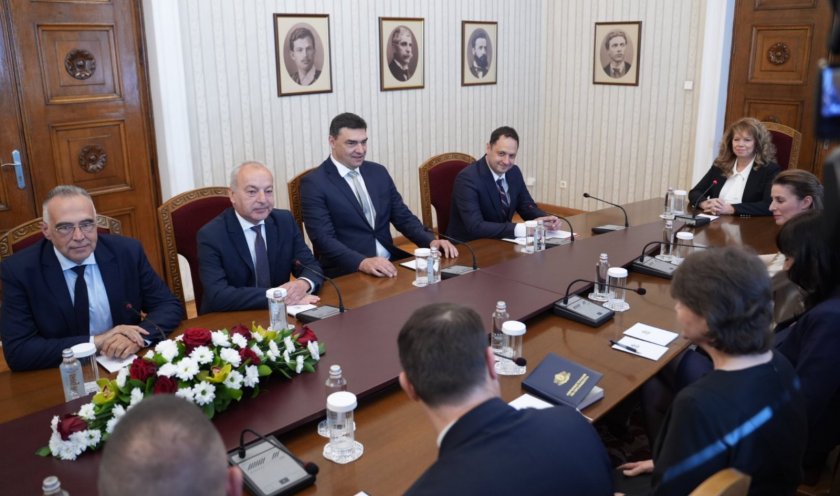
President Iliana Iotova on May 5 received representatives of the parliamentary group “Progressive Bulgaria” at the Presidency on Dondukov 2, as part of consultations with parties represented in Parliament ahead of handing the first mandate to form a government.
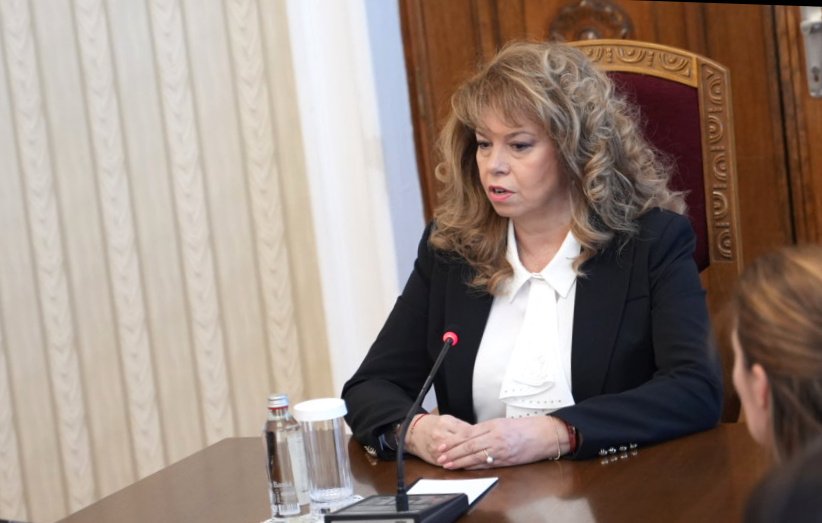
Welcoming the delegation, President Iotova thanked them for attending at what she described as a demanding period ahead. She congratulated the party on its “significant electoral success” in the parliamentary elections on 19 April and wished them well in forming a government.
“I know it will not be easy — not for any institution in the country — but I hope for a new way of working between institutions,” she said. “Many eyes will be on you, as you will need to uphold the electoral result in the coming months. It will be difficult, but I hope you will succeed.”
She noted that Bulgaria now finds itself in a new political situation, with voters having backed stability, a functioning government and security “in all aspects of the term”. For the first time in two decades, a single political force holds an absolute majority and is in a position to form a government independently, she added.
On the state budget, President Iotova said the caretaker government had made some progress but had not done enough to protect the most vulnerable amid rising prices and widening gaps between incomes and living costs. She stressed that the new budget would be the first key political task and called for clarity on how it would be approached.
Petar Vitanov, chair of the “Progressive Bulgaria” parliamentary group, said the party was acting both in line with its constitutional responsibilities and the mandate given by voters. He pledged swift action to end the political crisis and tackle major challenges such as inflation and declining living standards.
“Our priorities include legislative measures to curb soaring prices and widespread impoverishment, as well as restoring security and justice in economic, social and judicial terms,” he said.
Vitanov acknowledged what he described as the “catastrophic state of public finances”, warning that the country faces difficult months ahead. He pointed to preliminary data suggesting Bulgaria has exceeded the Maastricht criteria, and said a detailed assessment would follow once the new government takes office.
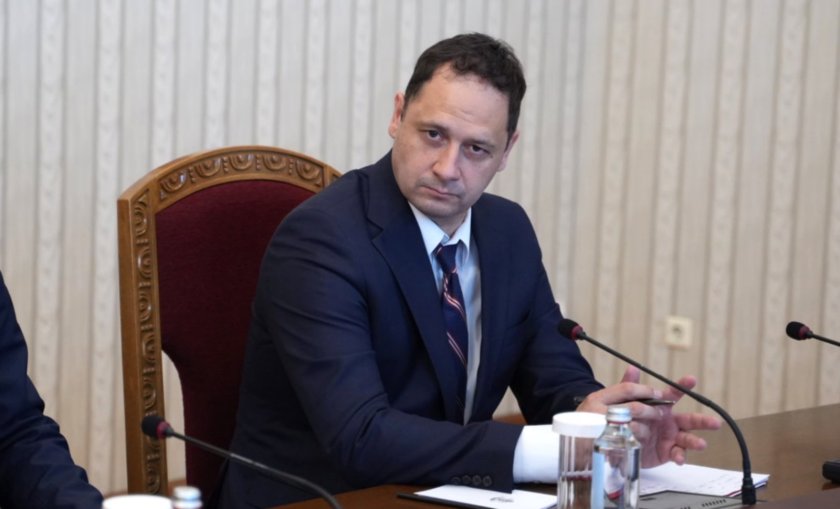
Vitanov acknowledged what he described as the “catastrophic state of public finances”, warning that the country faces difficult months ahead. He pointed to preliminary data suggesting Bulgaria has exceeded the Maastricht criteria, and said a detailed assessment would follow once the new government takes office.
“We are aware of the hidden pitfalls, even though we are not yet fully informed about them, including on financial matters — perhaps my colleague Mr Donev will elaborate shortly. What we do recognise, however, is the catastrophic state of the public finances.
Based on the preliminary indications, we will request detailed information once we assume office, and also beforehand when the caretaker government hands over. For us, the potential budget deficit is a major concern.
We have already seen, according to Eurostat data and subsequent revisions, that we have long exceeded the Maastricht criteria, much to our regret, and we face difficult months ahead.”
There will be no abrupt change in foreign policy, the party has said.
“On foreign policy, I want to reassure those critics who expect a radical or extreme shift — nothing of the sort. For nine years, there have been very clear positions, including those of President Radev, which are now closely aligned with the views of most European leaders,” the statement said.
Galab Donev underlined that one of the main priorities of the future government would be the restructuring of the expenditure side of the state budget.
Galab Donev, MP from “Progressive Bulgaria”, said:
“I would not go into detail regarding the financial state of the public finances of the state budget, as I am not fully familiar with the official reports prepared by the Ministry of Finance. I will only note the concerning level of the budget deficit, which by April has already reached 1.4% of gross domestic product.
This increase in the deficit is mainly due to several categories of expenditure, above all spending on personnel, pensions and social security payments, and to some extent capital expenditure. This indicates that the structure of the expenditure side of the state budget is not well balanced.
This will, of course, lead to a number of negative consequences in the future, as these are not one-off costs but long-term expenditures that recur year after year, typically increasing over time. Therefore, one of the main tasks will be to restructure the expenditure side of the budget.”
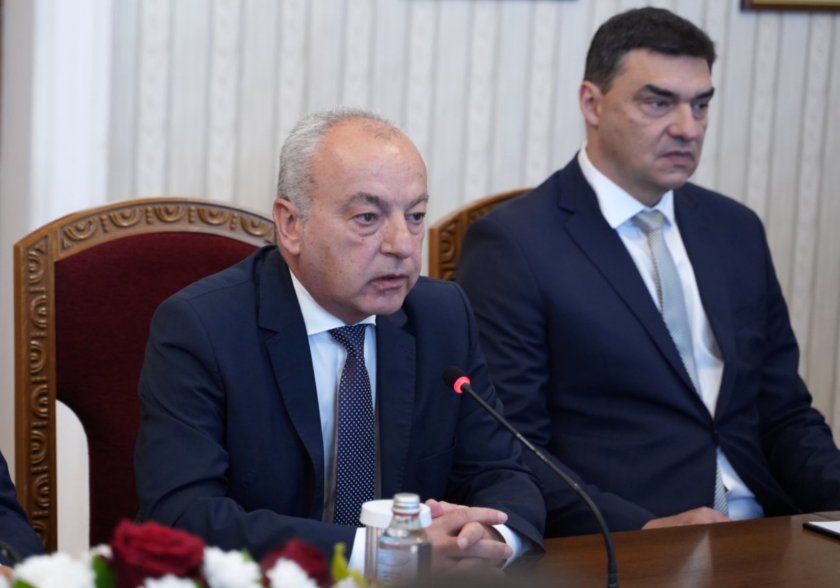
According to Donev, the absorption of European funds is also progressing slowly and with delays, both under EU programmes and funds and under the Recovery and Resilience Plan.
“There are delays, as you know, linked to the expiry of deadlines under the Recovery and Resilience Plan. If we fail to meet the benchmarks and criteria tied to the required reforms and the necessary legislation, we risk losing part of the funding under the facility for recovery and resilience.
A key focus of the work in both the National Assembly and the government will therefore be to safeguard as much of these payments as possible — to renegotiate where feasible and to preserve what can be saved from these European funds, which are primarily intended to support economic recovery after the Covid years.
However, we adopted a somewhat different approach — prioritising reforms first and investments afterwards. This may prove to have been a misstep, as many EU Member States chose to invest first and then proceed with reforms, which is both standard practice and a more effective way to absorb these funds more quickly.”
Mr Donev also noted that a new debt ceiling will need to be approved by the National Assembly.
“I will not go into a full and detailed analysis of the state’s financial position. I would simply say this — the situation is not good. Some would describe the state of public finances as catastrophic.
One of the first decisions that the National Assembly will likely need to take is to approve a new debt limit, so that the state can ensure the payment of pensions, wages and social spending, which are made on a monthly basis, and secure these payments through to the end of the year.”


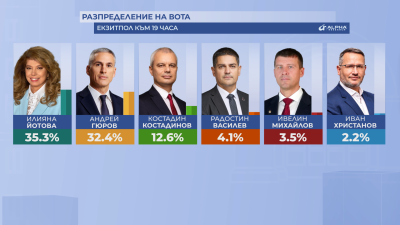
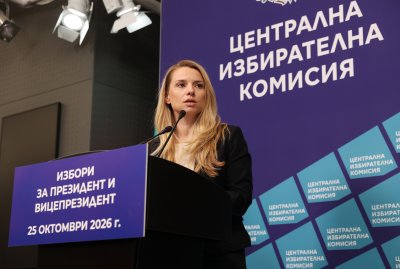
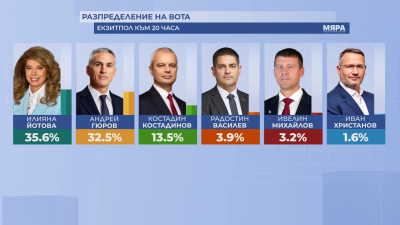
 Central Election Commission: With 7.37% of Polling Station Protocols Processed, Iotova and Gyurov Head to a Run-off in Presidential Election on 1 November
 Илияна Йотова: Илюзия е, че ако не се гласува, можем да извършим промяна в страната
 Историческа победа за студентите, Вучич призна загубата си на парламентарните избори в Сърбия










 Чуй новините
 Подкаст