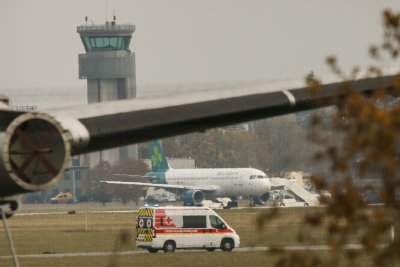
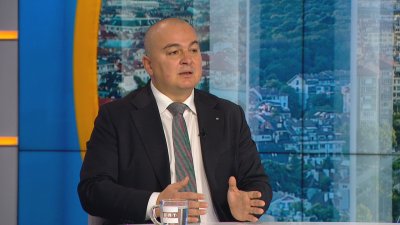
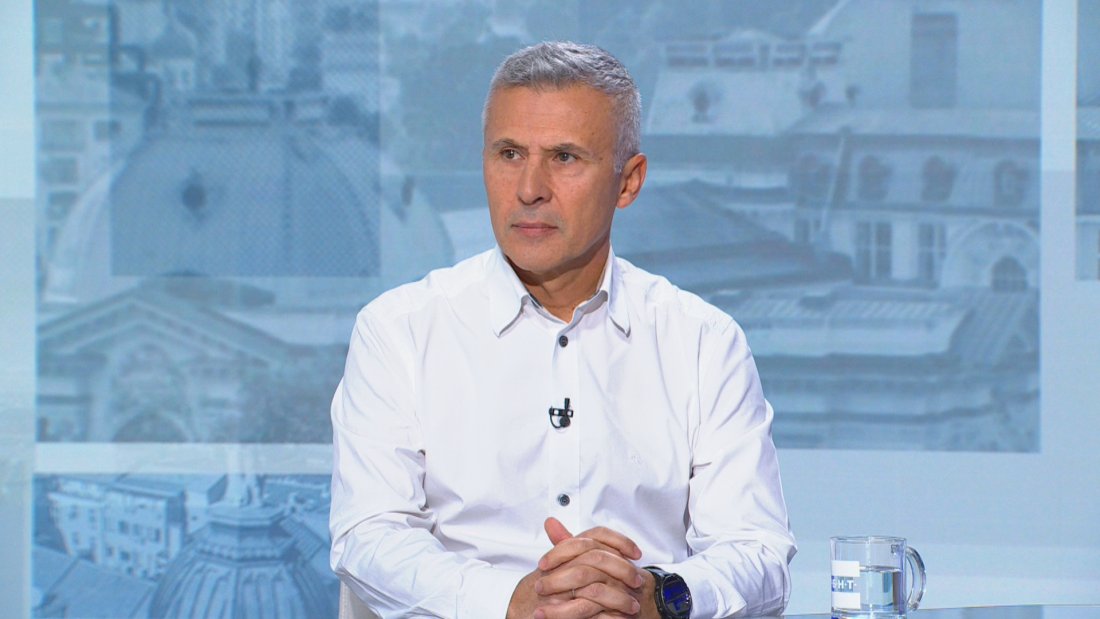
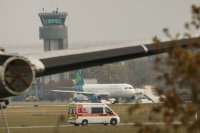
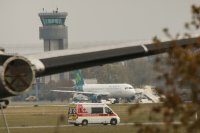
More than 25 aircraft have been forced to make emergency landings across Europe following bomb threats. In Bulgaria, the Air Force was scrambled today, November 5, in response to threats against three passenger aircraft. No explosive devices were found during the subsequent inspections. The issue was discussed on the More from the Day programme by Todor Ivandzhikov, chairman of the Association of the Bulgarian Aviation Industry.
“The skies are safe. As always, air transport remains the safest form of transport. Airports and airlines have procedures in place to deal with these situations. Hybrid warfare has now reached us, too. It started with drones, then moved on to ships. What is happening in Europe at the moment has now extended into the air. We were expecting this,” he said.
According to Ivandzhikov, such threats can lead to serious disruptions in flight schedules, even when they do not pose a real danger. Aircraft for which a bomb threat has been reported are given priority for landing, while others may be delayed:
“It is not that there is a danger, but when someone is travelling, they do not like having to land at a different airport or being delayed because another aircraft has to land ahead of them. When there is a bomb threat of this kind, that aircraft is always given priority to land. As a result, as happened today, some other flights may be delayed by a few minutes. Aircraft subject to such threats land first so that they can be inspected and we can make sure everything is in order.”
Ivandzhikov revealed that, in recent days, his consultancy firm's server had also been targeted by cyberattacks. The company works with the aviation sector across six continents. According to him, the attacks originated from an IP address that had also been used to target other organisations in France:
“Having seen how they are targeting my own server – I run a large aviation consultancy operating across six continents – I can tell you that the server has been under constant attack in recent days. We work with major companies, including leasing companies and airlines, which hold a considerable amount of information about aircraft and other matters. Today, my IT specialists responsible for cybersecurity told me that the attacks were coming from the same IP address used to target, for example, blood banks and supermarkets in France.”
He clarified that, for the time being, his specialists were monitoring the server and that information about the origin of the attacks would be passed on to the relevant authorities. He did not disclose the exact location of the IP address, saying only that it was somewhere close to Europe. In his view, bomb threats cannot be ignored, regardless of how frequently they occur or whether previous inspections have uncovered any dangerous devices.
He said that every threat triggers the activation of the crisis management team, while the airline informs the aircraft's captain. Any decision to divert the flight and land elsewhere is taken according to the circumstances:
“They assess how far the aircraft is from the airport to determine whether it should turn back or continue to its final destination. They also decide whether a military aircraft should be scrambled to escort it. All of this is decided by the crisis management team. It depends on the aircraft's altitude, its location, where it is heading and where it took off from. It is a very specific process.”
Ivandzhikov explained that passengers are not always informed immediately when a threat is received. In some cases, they are told that the aircraft is being diverted for technical or other reasons, in order to avoid creating unnecessary anxiety on board. Once the aircraft has landed, detailed inspections of the plane, luggage and passengers begin. Specialist equipment and sniffer dogs are used, and the checks can take several hours, depending on the size of the aircraft.
He said the latest series of threats had come at a particularly difficult time for the industry, which was already under pressure from high fuel prices and airlines' financial difficulties.








 Чуй новините
 Подкаст