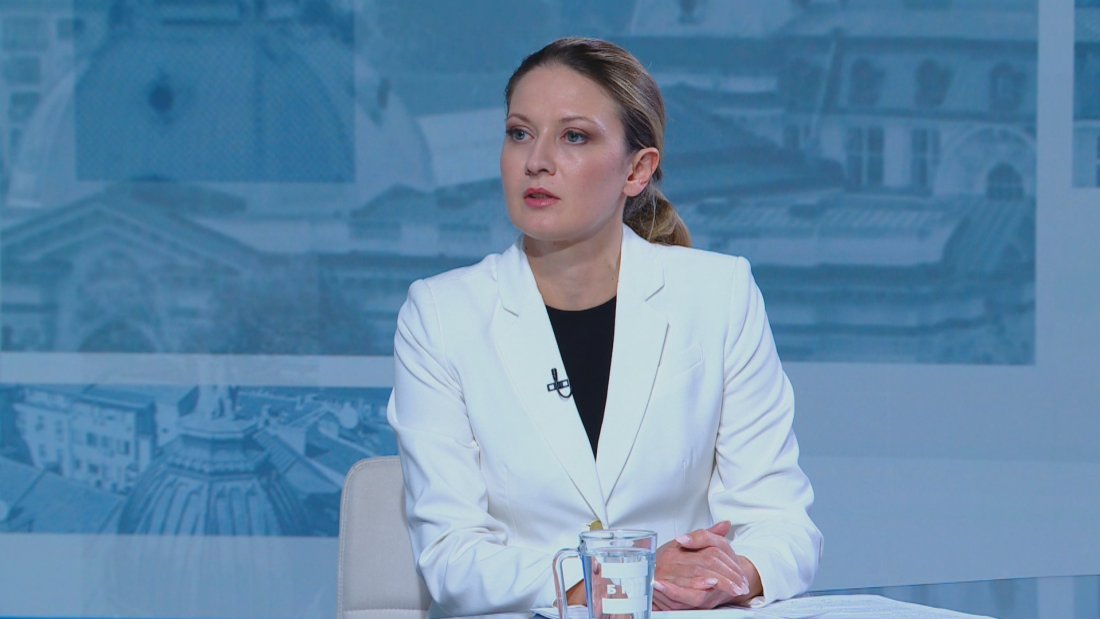
Energy connectivity is key to lower electricity prices, while Bulgaria occupies a strategic position in the development of new energy and trade corridors to Europe. MEP Tsvetelina Penkova told BNT's programme 'The Day Begins' on September 18. According to her, the fall in electricity prices in Bulgaria during the summer months demonstrates the effect of good connectivity, the energy mix and storage systems, but constraints on the grid connections with Austria and Hungary remain a problem.
She highlighted several key points from European Commission President Ursula von der Leyen's State of the Union address. Penkova identified the fact that von der Leyen raised the issue of energy connectivity at the very beginning of her speech as a particularly important point.
“First of all, the fact that President of the European Commission Ursula von der Leyen opened her speech by highlighting the issue of energy connectivity and the need to resolve it quickly. This is in fact also related to the regulation on electricity grids, which I am currently negotiating in the European Parliament. And it is very important both for Bulgaria and for the European Union as a whole. The second important point was the announcement of the summit on connectivity and the so-called Middle Corridor, which will be held here in Bulgaria.”
According to her, Bulgaria occupies a strategic position for both energy and trade corridors linking the South Caucasus and Central Asia with the European Union. She said that, as part of the negotiations on the electricity grids regulation, the Bulgarian region had been identified as a priority for investment.
“First of all, I will return to the regulation on electricity grids that I am negotiating, because there we managed to position and identify our region as a priority for investment and for building a highly secure and interconnected energy system. This means that such a summit once again confirms Bulgaria's importance and strategic significance as a place that can once again be seen as a gateway to European markets and the European Union, particularly in the energy sector. We are talking both about corridors and energy networks that can come from other countries, supply Bulgaria and continue on to the rest of Europe. And this, of course, leads to substantial investment and improvements to our country's energy infrastructure as a whole.”
The MEP also commented on the proposal for Canada to become an associate member, as well as the opportunities for closer energy and trade cooperation. She said the Canadian Prime Minister had highlighted the resources that the country could provide to support the EU, including liquefied natural gas and critical materials. According to her, this was a sign of a change in the EU's strategic trade relations.
“For me, this is a clear sign of a change in the European Union's strategic trade relations. In other words, I see a shift away from the United States towards Canada and other countries that were also mentioned, with which we have recently concluded trade agreements, including Mercosur, India, Indonesia, Mexico and Australia.”
Penkova also commented on electricity price movements in Bulgaria over the course of the year. According to her, the decline during the summer months is linked to available generating capacity, storage systems and cross-border connectivity.
Penkova warned, however, that this effect is not seen throughout the year.
“When you have connectivity and when you have an energy sector that generates electricity, when you have storage systems, then prices are low. But unfortunately, here in Bulgaria, we will only see this during the summer months.”
Penkova also commented on the package of measures announced by the government in response to fuel prices. According to her, there are currently no comparable measures at European level that address the problem in the long term.
“Unfortunately, at the moment there really are no measures of this kind that would solve the problem in the short term.”


 Central Election Commission Met with International Observers From More Than 14 Countries
 National Service for Protection (NSP) Officer Martin Varadinov Tells Court: I Have Lawfully Performed My Duties
 Хронология и факти: Инцидентът с Колтуклиева, обвинение и последвала оставка (ОБЗОР)
 Сунгурларе и Белица, обществени поръчки за милиони евро и една фирма - коя е тя?









 Чуй новините
 Подкаст