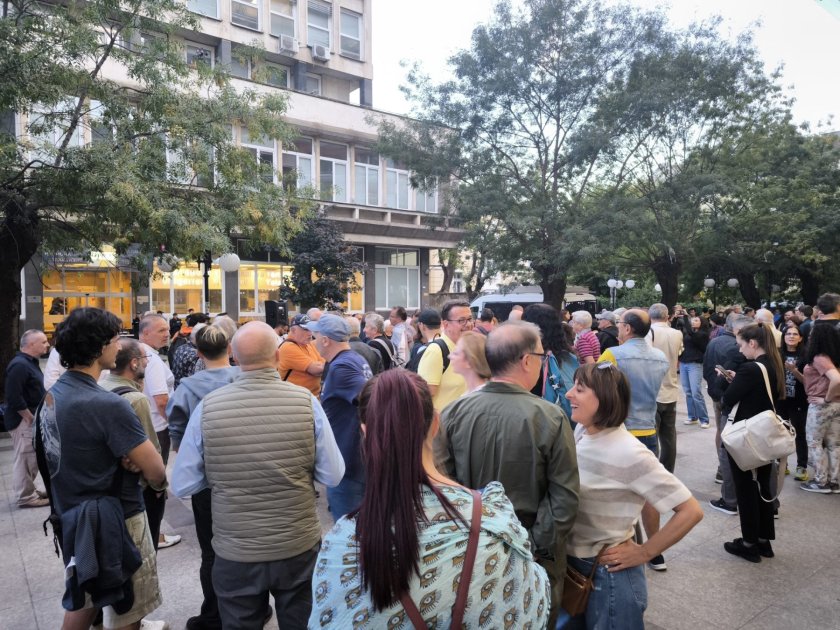
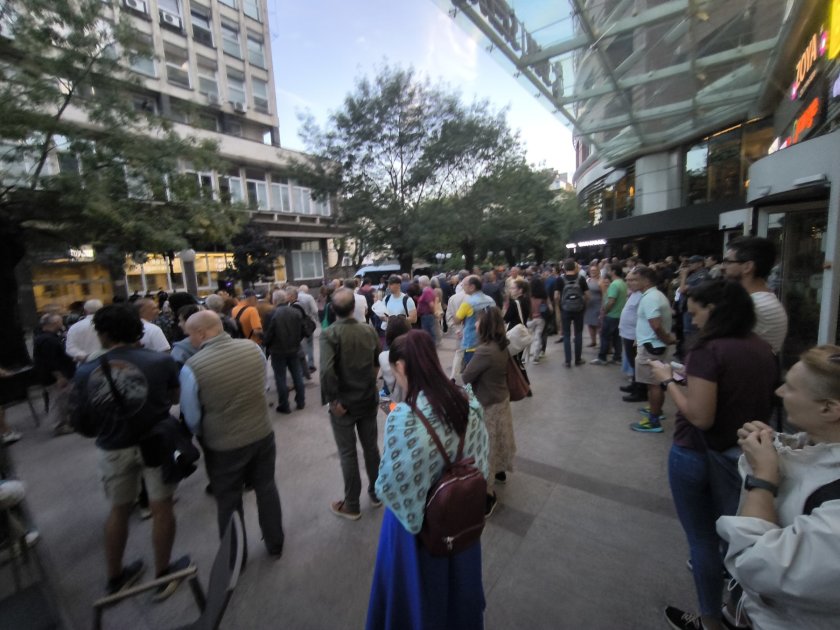
A protest was held outside Bulgarian National Television (BNT) after the decision to have “History.BG” continue with a single regular host. The protest was organised on social media and began at 7:30 p.m. on September 14.
Those who gathered outside the public broadcaster expressed their support for the programme’s long-time journalist and host, Georgi Angelov. They also called for public consultation on any future changes to BNT’s programming schedule. The issue has been in the public eye for more than a week now. It has even sparked political commentary on the matter.
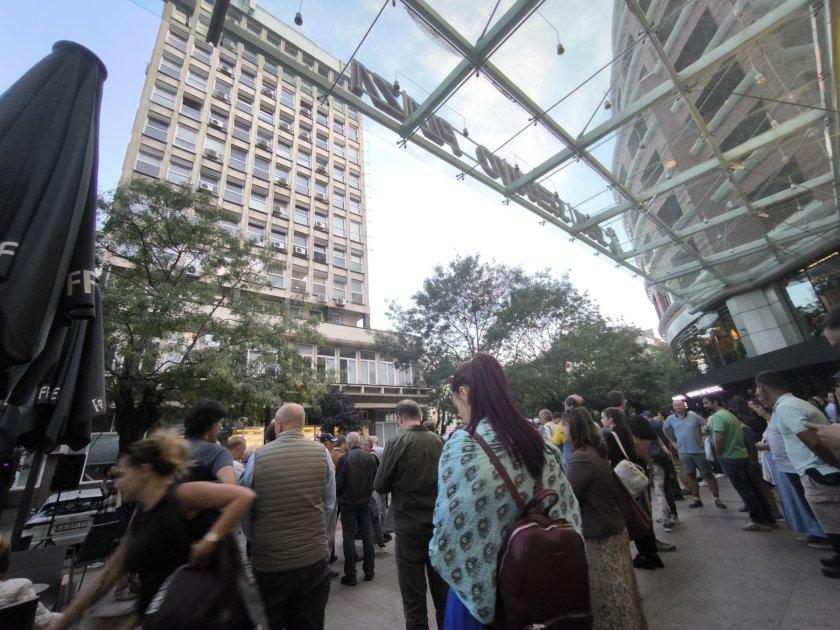
Iliyan Vasilev, protest organiser: “I did not know Georgi Angelov personally. We got in touch by phone after I expressed my indignation. And since another edition of ‘History.BG’ is about to begin, I decided to invite people who most often appear on the programme so that we can show together why it is important for Bulgarian citizens to be presented with history that has not been distorted by those in power.”
“This is a small step towards many more restrictions that we can already sense and that are yet to come.”
“BNT is not a state television channel; it is a public service broadcaster. No one can make such a decision without taking into account the people who are the main consumers of your work.”
As BNT’s management has already announced, host Georgi Angelov remains part of the public television team. The BNT Board of Directors issued a statement last week in which it categorically rejected any attempt to turn a professional programming decision into a political issue. The BNT Board of Directors respects every citizen’s right to express an opinion on the public television network’s programming.
BNT management has already said that Georgi Angelov will remain part of the public service broadcaster’s team. Last week, BNT’s Management Board issued a statement firmly rejecting any attempt to turn a professional programming decision into a political issue. The board also said it respects the right of every citizen to express an opinion about the public service broadcaster’s programmes.
However, the board stressed that there is a clear distinction between the right to express an opinion and criticism, and political pressure to change a specific programming or staffing decision at an independent public broadcaster.
The principle of public media independence is enshrined not only in Bulgarian media legislation but also in the European Media Freedom Act.


 Гледайте първия епизод от новия, шести сезон на култовия сериал "Под прикритие" по БНТ










 Чуй новините
 Подкаст